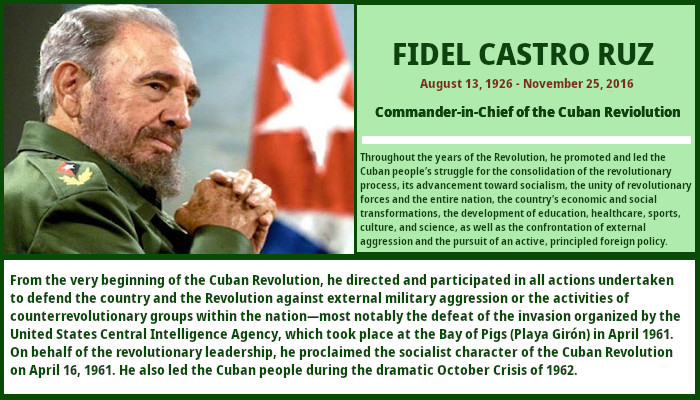
Fidel Castro continues to stand as a towering figure in world history, while the perspectives of his followers worldwide reveal a complex blend of admiration, criticism, and nuanced interpretation. Understanding these perspectives requires considering the broad course of Cuban history, the language of socialist solidarity, and the diverse political contexts of other countries. Many supporters attribute Castro’s appeal to a commitment to national sovereignty and opposition to imperialism. In the decades following the Cuban Revolution, he presented Cuba as a symbol of resistance to U.S. influence in the Western Hemisphere.
This position resonated with many movements seeking freedom from colonial or neo-colonial systems of power. Among followers in Africa, Latin America, and parts of Asia, Castro’s leadership served as practical evidence that a small nation could determine its own course, challenge dominant powers, and pursue an alternative development model—one based on education, universal health care, and social welfare. For these admirers, the focus on literacy campaigns, free medical care, and affordable housing offered concrete evidence that political will, combined with organized citizen participation, could produce meaningful progress.
In other regions, Castro’s rhetoric appealed through its broader criticism of capitalism and its vision of solidarity rather than simple state control. Supporters frequently point to Cuba’s internationalist initiatives: doctors who volunteered on prominent missions throughout Africa and the Caribbean, along with educational exchanges that established enduring connections. These efforts encouraged a sense of global fraternity, with aid and expertise crossing borders in a spirit of equal partnership. Castro’s Cuba was also viewed as a refuge for political dissidents and revolutionary ideas, attracting sympathizers who valued a firm, principled position against what they regarded as Western hegemony.
Yet Castro’s followers do not share a single view. Within Cuba, supporters stress achievements in literacy, health, and social equality while recognizing trade-offs such as restrictions on political pluralism and limited media freedom. For many, the central issue is whether these social outcomes warranted the concentration of power and curtailment of certain freedoms. Internationally, followers include devoted allies who regard Castro as a defender of the poor and a barrier against U.S. influence, as well as critics who contend that one-party rule and state-controlled rhetoric ultimately hinder innovation and individual liberty. Even among admirers, there is often careful consideration of the tension between social welfare and political emancipation. Cultural memory also influences how followers recall Castro.
In some countries, statues, street names, and commemorative events preserve his legacy, not as a flawless example but as a symbol of resistance and self-determination. Elsewhere, veterans of anti-colonial struggles who once identified with his position may now reconsider his methods, acknowledging both his strategic accomplishments and the costs of centralized power. Worldwide discussions among followers often stress continuity with anti-imperialist traditions, including sovereignty, dignity, and the right to create institutions suited to local needs rather than external demands. Among followers in educational and intellectual circles, attention often centers on criticizing capitalism rather than fully endorsing every Castroist policy.
They commend the commitment to critical thinking, the readiness to challenge powerful interests, and the ambition to develop systems of social provision that other nations could examine and adapt. This group generally distinguishes broader ideals from the practical shortcomings of governance, maintaining that valuable lessons can be learned without approving every action of the Cuban system.
In summary, the global perception of Fidel Castro among his followers is varied and complex. It combines admiration for his firm dedication to sovereignty, social welfare, and international solidarity with a sober recognition of political repression and the constraints of one-party rule. Discussion of his legacy continues to change under the influence of shifting global politics, new generations, and persistent debates over how to reconcile social justice with political freedom.