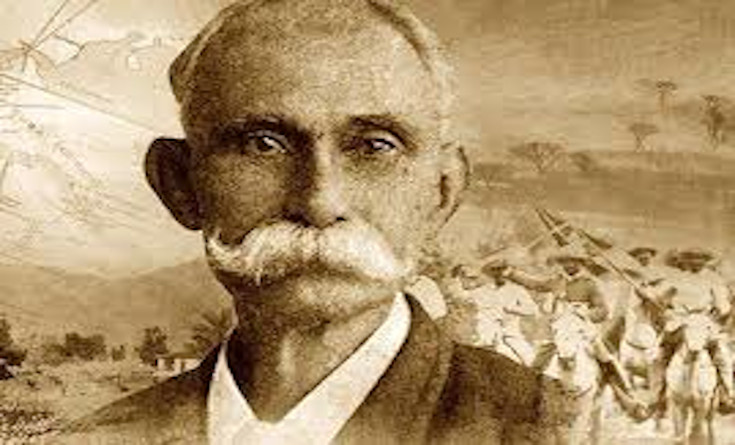
Maximo Gomez’s victory at La Sacra Combat remains a powerful illustration of bold strategy and disciplined leadership, a moment that echoes in military lore long after the fighting has ended. In a battle where sheer numbers threatened to overwhelm, Gomez showed how skill, timing, and daring can balance the scales between 1,500 opponents and a mere 300.
From the very start, the odds appeared nearly hopeless. Three hundred men facing five times their number would normally mean certain defeat for any commander. Yet Gomez refused to see the imbalance as a straightforward contest. He devised a plan grounded in maneuver, deception, and the psychological advantage that comes from a unit fighting with purpose and unity. The result was more than a tactical victory, it was a lesson in how smaller forces can outperform larger ones when every soldier understands his role and the mission.
Central to this success was Gomez’s choice of ground and timing. He selected a battlefield that suited his small force: confined terrain that blunted the enemy’s numerical superiority, and a flank that could be struck with precision. By using cover, setting up decisive firing lines, and applying constant pressure, he drove the larger force into costly, fragmented attacks. The 300, acting as one coordinated unit, built momentum, often striking when the enemy paused to regroup, thus keeping the larger force from stabilizing its assault.
Another crucial factor was morale. Gomez’s troops fought not only with weapons but with confidence that they were following a plan that made sense. Soldiers in such situations draw strength from leadership; they take courage from the certainty that their commander knows the terrain, has mapped the moves, and will not waste their lives in a pointless display. That clarity of purpose can turn fear into resolve, and resolve into decisive action. In this case, the 300 men carried the weight of a larger force behind them through discipline, not sheer numbers.
Innovation also mattered. Gomez used feints and swift, purposeful movements that disrupted the enemy, breaking their orderly formations. He turned obstacles into advantages, using narrow passages to funnel enemy troops into kill zones where the 300 could concentrate fire and maximize impact. The tempo he set, fast, precise, and relentless—kept the opposing force reacting rather than acting, letting Gomez’s small unit dictate the terms of the fight. The outcome at La Sacra Combat resonates beyond the battlefield. It is a reminder that victory can depend on quality over quantity, on a plan that exploits terrain, timing, and morale, and on leaders who stay composed under pressure. Gomez’s victory, won with just 300 men against 1,500, demonstrates a lasting military truth: control the conditions of engagement, and your adversary’s numbers lose their advantage. Reflecting on this achievement, one also sees a model for modern leadership. Clear objectives, careful preparation, and steady execution can turn limitation into strength. The story of 300 fighting 1,500 at La Sacra Combat offers a compact, compelling case study in how strategic ingenuity and disciplined obedience can turn the tide when the odds are against you.