The need for specialized scientific information when treating patients with spinal injuries prompted the development of a software tool designed to assist neurosurgery professionals in Cuba.
The tool, called RAQUIS, is a mobile application created by Evelyn Lorenzo Morales—a third-year resident in the specialty at the Camilo Cienfuegos Provincial General Hospital in Sancti Spíritus—in collaboration with her partner, software programmer Yasiel Tamayo Rivera, and with guidance from Dr. Ariel Álvarez Rodríguez, a senior specialist and head of the department.
The initiative was unveiled on November 16 as part of the scientific program for the 25th “In the Service of Life” Symposium (*Jornada Al Servicio de la Vida*), which was dedicated specifically to the neurosurgery department of the Sancti Spíritus institution.
“In recent months, we have been encountering many spinal cord and vertebral column injuries, particularly in the thoracolumbar region. It is no secret that we face certain limitations—whether regarding diagnostic imaging resources or the surgical instruments needed to treat these patients,” explained Evelyn.
This clinical reality gave rise to the proposal for a tool that would provide medical staff with specialized scientific information and enable rapid calculations, all without requiring an internet connection.
RAQUIS is designed specifically to support the assessment of fractures and other traumatic injuries to the thoracolumbar spine, utilizing the AO Spine classification and scoring system—an international standard for evaluating such injuries.
This region encompasses the transition between the thoracic and lumbar spine. The application focuses on the T11, T12, L1, and L2 segments as the anatomical reference points for its scope of use. The application functions by organizing various variables relevant to assessing an injury: the morphology of the vertebral damage, the patient’s neurological status, the integrity of the posterior ligamentous complex, and specific individual factors that may influence the therapeutic approach.
Based on these elements, the application calculates a score that helps guide the specialist regarding treatment options, including conservative management and surgical intervention.
“The application categorizes the injury based on its morphology, the damage to the spine, which ligaments are torn or injured, and the patient’s specific comorbidities. It performs a calculation that supports us in our decision-making,” explained the young neurosurgeon.
The tool is based on scientific criteria developed by AO Spine—an international organization affiliated with the AO Foundation—whose classification systems establish a common language among specialists and assist in the evaluation of vertebral injuries.
A key factor is the consideration of pre-existing conditions, such as ankylosing spondylitis, which can compromise spinal stability and alter therapeutic decisions—even in cases where the calculated score does not, on its own, fully capture the complexity of the situation.
However, RAQUIS does not replace clinical judgment, nor does it automatically dictate a surgical intervention. Its purpose is to provide a reference for the medical professional, who must integrate the result with findings from the physical examination, available imaging studies, and the unique characteristics of each patient.
“It’s not as if the application makes the decision for us. We must possess the necessary prior knowledge to determine whether or not the application’s assessment is correct,” clarified Evelyn.
The project integrates expertise from clinical practice, academic training, and computer programming. The initial idea emerged during a discussion between the resident and her mentor—who is also the head of the department—Ariel Álvarez Rodríguez, who suggested turning the classification calculator they used as a reference into an application.
“When we discussed the topic, my department head said, ‘This would be great for an app.’ And he was right. I mentioned it to my partner, and we started working on it,” recalled Evelyn.
Patient safety and privacy are also essential features of this tool. RAQUIS does not require names, identification numbers, or other personal data to perform its calculations. Specialists enter the clinical parameters necessary to classify an injury without needing to input any information that could identify the patient.
“This application fully upholds patient ethics, as it does not request personal data; in other words, it does not include any patient-identifying information to function on a phone,” explained Dr. Ariel, referring to this specific characteristic.
The proposal received the backing of the neurosurgery team, whose members recognized the value of having a reference tool available in the emergency department, as well as for the training of new specialists.
According to Evelyn, the application is designed for neurosurgeons, orthopedic surgeons, residents, and students involved in the care of these types of injuries across the country. In its current version, its scope is limited to thoracolumbar spinal trauma. It does not cover degenerative spinal diseases or other conditions unrelated to this traumatic context.
Another key feature is that it does not require an internet connection to function. The scientific content is built into the application, allowing users to access it from their mobile phones without depending on network availability.
The developers plan to distribute it for free via the Google Play Store and to incorporate ongoing improvements and updates. At the time of its launch, it was not yet available for public download on that platform, though the creators expected to finalize this step in the coming days.
The launch of RAQUIS is part of a scientific program that acknowledges the development of neurosurgery in Sancti Spíritus and its contribution to the care of patients with highly complex neurological conditions. For Álvarez Rodríguez, dedicating the “In Service to Life” symposium to this medical specialty serves as recognition for over four decades of clinical, educational, and scientific work.
“It is a significant acknowledgment, as it validates the efforts of many generations who have shared a single goal: providing excellent patient care,” he stated.
The head of the department highlighted the role of Dr. Lino Zulueta Nocedo—regarded as the father of neurosurgery in Sancti Spíritus—who arrived in the province in 1989 and played a decisive part in establishing and developing the specialty in the region.
Since that time, new professionals have joined the team, forming a cohesive group that has sustained specialized clinical care, the training of residents, and the execution of highly complex medical procedures.
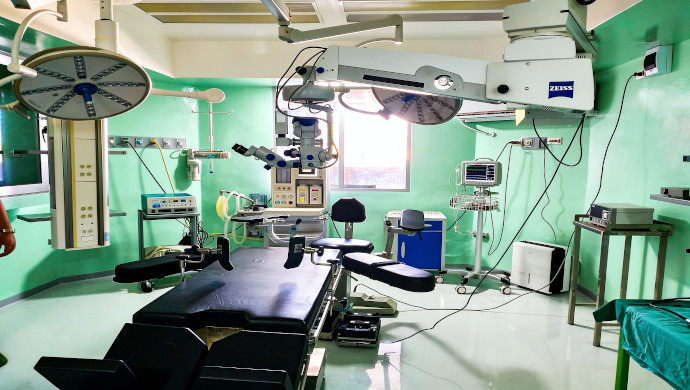
Dr. Ariel noted that, despite the material challenges of the current environment, the team possesses the necessary infrastructure and professional expertise to continue its work. Among its key assets, he pointed to the operating room, the inpatient ward, a training laboratory, and a staff that includes Doctors of Science, holders of master’s degrees, senior-level specialists, professors, and residents.
In 2026, the institution also made headlines for reviving highly complex neurosurgical procedures—such as vascular surgery for aneurysms (https://www.radiosanctispiritus.cu/es/cazadores-de-aneurismas/)—a success achieved through professional training, multidisciplinary collaboration, and the pursuit of creative alternatives in the face of material constraints.
In this context, the new application stands as further evidence of the inventive capacity of a team that leverages research, education, and the integration of technological solutions to continuously refine its performance. Its importance lies not merely in bringing a “specialized calculator” to a mobile phone, but in providing structured knowledge and classification criteria to those who must evaluate patients at critical moments—all while safeguarding the privacy of the individuals receiving care.
Furthermore, the initiative demonstrates the value of collaboration among professionals from different disciplines, as well as the role of young people in seeking solutions to the everyday challenges of medical practice.
In Sancti Spíritus, a neurosurgery resident, their mentor, and a software programmer have transformed a professional need into…
(Source: cubadebate)