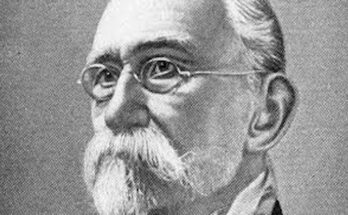
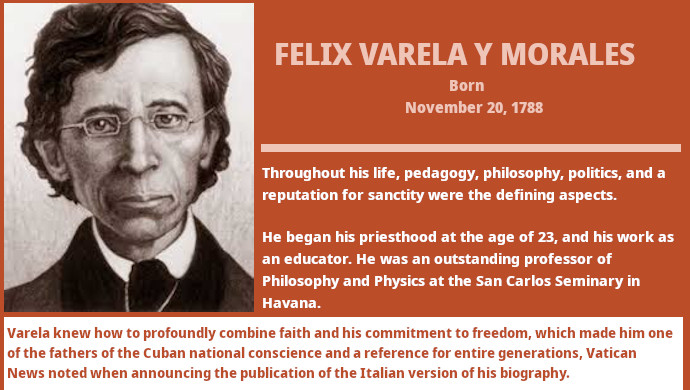
Felix Varela y Morales, born in Cuba on November 20, 1788, stands as a crucial figure in the history of Cuban letters, education, religion, and national identity. His life bridged the worlds of colonial Cuba, the reformist currents of early 19th-century Spain, and the rising aspirations for independence across Latin America. Through his work as a writer, priest, educator, and reform-minded thinker, Varela helped lay the intellectual groundwork for a modern Cuban consciousness and contributed to broader conversations about liberty, human dignity, and national self-determination.
From a young age, Varela displayed a rare combination of piety and intellectual curiosity. He pursued priestly studies and soon recognized the power of ideas to shape society. As a cleric, he did not retreat into a cloistered life; rather, he engaged with the pressing social issues of his time. He observed the inequalities and constraints that Afro-Cuban and mestizo communities faced, and he refused to accept a status quo that denied basic human rights. This stance set him apart in a society where religious authority often aligned with colonial power, making his outspoken calls for reform all the more notable.
One of Varela’s most enduring legacies is his advocacy for education as the cornerstone of a freer and more just society. He championed schools that would uplift the poor and empower citizens to participate more fully in public life. He believed that education could open doors to opportunity, promote moral improvement, and cultivate a spirit of civic responsibility. In his writings and public lectures, he emphasized methods of teaching that encouraged critical thinking, ethical reflection, and a sense of shared humanity. Through these efforts, he helped foster a culture of literacy and inquiry that would echo beyond his lifetime.
Varela also made significant contributions to the Catholic intellectual tradition by arguing for a reformist approach within the church. He sought to reconcile faith with reason and to promote a more compassionate and just application of Christian doctrine. He did not advocate for a wholesale rejection of tradition; instead, he urged church leaders to respond to the needs of the people and to confront social injustices with humility and courage. This balanced stance earned him respect among reform-minded clergy and lay supporters alike, while also inviting scrutiny from more conservative factions. His theological reflections stressed the dignity of every individual and the responsibility of religious communities to serve the vulnerable.
Beyond education and theology, Varela’s writings and political thought engaged with the broader currents of Latin American emancipation. He lived at a time when Enlightenment ideals—liberty, equality, and fraternity—were circulating across the Atlantic, challenging colonial rule and encouraging new national identities. Varela’s critiques of oppression and his insistence on human rights resonated with those who sought independence and greater self-governance. He understood that freedom was not merely a political arrangement but a moral climate in which people could pursue their talents, care for one another, and participate in public life with dignity.
Varela’s influence extended to his role as an educational reformer and a public intellectual who connected local Cuban concerns with regional and global conversations. He used correspondence, sermons, and essays to reach a broad audience, including students, clergy, and lay readers. His ability to translate complex ideas into accessible language helped spread liberal and humanistic values in a society that often restricted open discourse. In doing so, he laid a durable foundation for later generations who would carry forward the struggle for independence and the development of a distinct Cuban national identity.
In assessing the significance of Felix Varela y Morales, one sees a figure who embodies the transformative potential of ideas when paired with courage and service. He challenged injustice not with bitterness, but with a constructive vision for education, religion, and public life. He believed that knowledge could empower individuals to lead better lives and that faith could be a force for compassion and reform. While he did not live to witness Cuba’s eventual path to independence, his intellectual and moral legacy propelled others to continue the work of building a more just and humane society.
Today, Varela is remembered as a cornerstone of Cuban intellectual history. His advocacy for education as a route to freedom, his call for reform within the church, and his commitment to human dignity collectively mark him as one of the most significant figures in Cuba’s march toward modernity. His life offers a timeless reminder that the pursuit of truth, the defense of human rights, and the cultivation of a thoughtful, informed citizenry are essential to any nation seeking a brighter, more inclusive future.