It is a combative tradition in our country to extend the armed struggle to the West, since most liberation efforts begin in the East. During the final stage of the fight against the Batista regime in 1958, this military action was also considered by the Rebel Army.
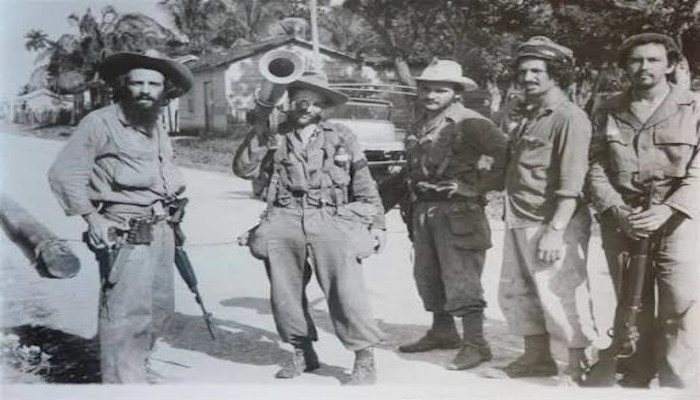
Thus, on August 21, 1958, the No. 2 Antonio Maceo Invasion Column, under the command of Commander Camilo Cienfuegos, departed from the Sierra Maestra. This name paid tribute to the epic feat accomplished in his time by the man known as the Bronze Titan.
This Invading Column was founded on August 18, 1958, by Military Order issued by the Commander-in-Chief of the Rebel Army and the 26th of July Movement, Fidel Castro Ruz, with the objective of mobilizing the entire island for war and expanding the armed struggle in general. This was coupled with the memory of the Mambí strategy, honoring past heroic deeds.
Meanwhile, Column 8 “Ciro Redondo,” led by Commander Ernesto “Che” Guevara, received a similar mandate, with the specific instruction to remain operating in Las Villas province. This would facilitate the passage of Camilo’s troops to Pinar del Río province, the westernmost point of the island.
This column comprised approximately 92 fighters, equipped with some 82 weapons, who penetrated the former province of Las Villas on October 7, 1958, after considerable hardship and effort. Once there, Fidel Castro ordered them to remain in the province alongside Che Guevara before continuing their march toward Pinar del Río, with the aim of consolidating the rebel force in that area.
As a result, attacks were launched against small garrisons throughout the territory, providing opportunities to gather weapons and ammunition for subsequent operations. The battles of Seibabo, Venegas, Zulueta, General Carrillo, Jarahueca, Iguará, Meneses, Mayajigua, and Yaguajay remain particularly noteworthy.
In the latter, enemy troops were significantly reinforced, and the battle dragged on for nine days. Finally, the rebels managed to capture the town, coinciding with Che Guevara’s victory in Santa Clara at the end of 1958.
These actions contributed significantly to Batista’s flight and the subsequent revolutionary triumph, especially due to Camilo’s responsibility in capturing the tyranny’s strongest stronghold: Camp Columbia in Havana, which had served as the headquarters of the Army General Staff. This decisive mission was accomplished on January 2, 1959. Thus, Camilo was present at the reception for the Caravan of Victory, led by Fidel Castro, on January 8.
The march of the Antonio Maceo Invading Column was marked by difficulties ranging from armed pursuit to harsh weather. In total, they advanced westward for 48 days, covering more than 700 kilometers through rugged terrain, mostly on foot. Camilo himself later acknowledged that this movement tested the courage and resilience of the men who comprised it, referring to the
“difficult days that the Antonio Maceo Invading Column endured to reach Las Villas province, revealing the mettle and valor of the men of the Revolutionary Army, men who, despite hunger, despite being pursued, despite having swollen feet and wading through waist-deep water and mud for twenty days, saw only two paths: the path of death or the path of freedom.”
Certainly, the invasion of western Cuba demonstrated a commitment to the Cuban cause, the unwavering will of a people who know they are oppressed but relentlessly seek freedom and the right to shape their own destiny. Camilo and his men are an enduring example of this courage, and every August 21st, Cuba commemorates the beginning of this epic invasion of western Cuba.