Cuba has long taken a distinct path in addressing drug abuse, combining public-health strategies, community involvement, and state coordination. The island’s approach emphasizes prevention, treatment, and social reintegration rather than relying primarily on criminal punishment. This article examines Cuba’s methods, their outcomes, and the lessons other countries might draw.
A public-health framework Cuba treats drug abuse principally as a health issue. The government supports wide-reaching prevention programs that begin early and target schools, workplaces, and neighborhoods. Education focuses not only on the dangers of drug use but also on building life skills, decision-making, emotional regulation, and conflict resolution, that reduce vulnerability. Health campaigns use mass media, community meetings, and direct contact through family doctors and neighborhood health workers, ensuring messages reach even remote areas.
Prevention is reinforced by an integrated primary care system. Every community has accessible primary care teams that maintain long-term relationships with families. These teams can identify at-risk individuals early, provide counseling, and coordinate referrals to specialized services. The strength of primary care enables ongoing monitoring and support, which helps prevent experimentation from escalating into addiction.
Accessible treatment and rehabilitation Cuba provides a range of treatment options that are publicly funded and widely available. Treatment emphasizes psychosocial therapies, outpatient counseling, and community-based rehabilitation centers. Residential and semi-residential programs offer structured environments for detoxification and rehabilitation, with therapy, vocational training, and education aimed at rebuilding life skills.
Crucially, treatment in Cuba is not narrowly medicalized. Programs integrate social support, family involvement, and occupational training so that recovery addresses the social and economic factors that contribute to relapse. Reintegration into work and community life is a central goal, reducing stigma and promoting long-term stability.
Community and family engagement Family and community networks play a key role in Cuba’s system. Cultural norms that emphasize mutual aid and collective responsibility facilitate family participation in prevention and recovery. Neighborhood Committees for the Defense of the Revolution, while primarily a political institution, have also been mobilized historically to support social programs, including monitoring welfare and helping vulnerable families access services. Such local structures enable rapid response when individuals show signs of drug problems and create social accountability that discourages substance abuse.
Emphasis on social determinants Cuba’s policies recognize that drug abuse is closely linked to social conditions. Efforts to reduce unemployment, expand education, and ensure basic needs are met are part of the broader strategy to minimize the social drivers of substance use. Housing stability, access to meaningful work, and education opportunities are treated as preventive investments that reduce the appeal of drugs.
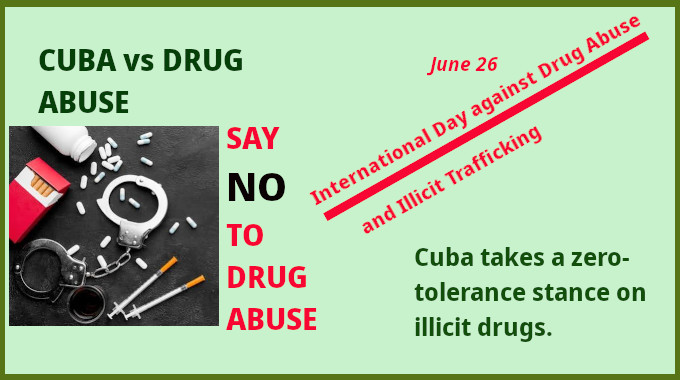
Law enforcement and controlled response While prioritizing health and social measures, Cuba maintains strict controls on the drug trade. Law enforcement targets trafficking and distribution networks rather than users. Possession and use are criminalized, but the system has often channeled users toward treatment and rehabilitation instead of the prison system. That said, the state’s firm stance on law and order has raised concerns among human rights observers about due process and the potential for overly punitive measures in some cases. Balancing public health needs with civil liberties remains an area of international scrutiny.
Outcomes and limitations Cuba’s model has produced relatively low rates of drug addiction compared with many countries in the region. Strong prevention, universal health coverage, and social supports contribute to these outcomes. However, challenges persist. Limited resources and economic constraints affect the quality and availability of some services. The island’s isolation and limited access to international trade can restrict availability of certain medications and modern therapeutic tools. Moreover, the stigma associated with drug use continues to deter some individuals from seeking help promptly.
International cooperation and knowledge sharing Cuba has engaged in international dialogue and assistance on public health, offering expertise in primary care and community health models that are relevant to drug prevention and treatment. Sharing best practices, particularly in community-based prevention, integration of services, and training of healthcare workers, can help other countries adapt effective elements of Cuba’s approach to their own contexts.
Cuba’s response to drug abuse highlights the potential of a coordinated, health-centered approach grounded in strong primary care and community involvement. While resource constraints and human rights concerns warrant attention, the core emphasis on prevention, accessible treatment, and social reintegration offers a valuable model. Countries seeking to reduce drug-related harm can learn from Cuba’s integration of health services, community networks, and social policy to build more effective, humane drug strategies.