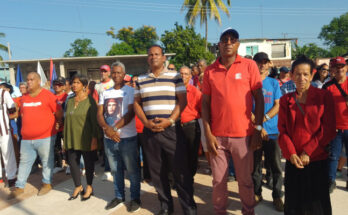

Cuba celebrates the Sports journalism with a long and rich story. Sports journalism occupies a distinctive place within the island’s media landscape. Shaped by revolutionary history, state media structures, limited resources, and a deep popular passion for sport, Cuban sports reporting combines civic purpose, cultural pride, and persistent professional effort. This article outlines the history, institutional framework, daily practice, challenges, and evolving future of sports journalism in Cuba.
Historical and institutional background From the early 20th century, newspapers and radio covered baseball, boxing, and other popular pastimes. After 1959, the revolutionary government consolidated mass media under state control and redefined the role of journalism as a public service. Sports journalism became part of that mission: promoting mass participation, celebrating national achievements, and reinforcing collective values.
Cuban sports journalism has long been closely tied to national sporting institutions. Coverage often foregrounds amateur success, and frames those successes as expressions of national resilience and social policy. At the same time, journalists have cultivated deep local knowledge through close relationships with coaches, athletes, and sports administrators.
Daily practice and storytelling In practice, Cuban sports reporters combine match coverage, athlete profiles, analysis, and community reporting. Baseball remains the dominant beat: game recaps, player statistics, and season narratives attract large readerships. Boxing and athletics follow, with gymnastics, volleyball, and emerging sports gaining attention as Cuban athletes appear at international competitions.
Professional culture and training Cuban sports journalists are often trained in state-run universities and journalism schools where curriculum covers both technical skills and the role of media in society. Many reporters begin at local or provincial outlets, building expertise through years of beat reporting. The tight-knit professional culture encourages deep knowledge of sports rules, statistics, and local talent pipelines; it also values adaptability, as many journalists must produce text, radio commentary, and television segments with modest resources.
Ethics and public trust Sports journalists in Cuba generally command significant public trust. Their role in chronicling national triumphs and everyday community sport creates a bond with readers and listeners. Ethical practice is shaped by professional codes and social expectations: accuracy in results and statistics, fair treatment of athletes, and sensitivity to the public role of sport. At the same time, the interdependence between media and sporting institutions can complicate accountability when systemic problems arise.
Notable moments and voices Over decades, Cuban sports journalism has highlighted dramatic moments, Olympic boxing golds, baseball victories over international teams, and the emergence of globally admired athletes such as Teófilo Stevenson and Javier Sotomayor. Commentators and columnists who combine sharp analysis with an understanding of Cuba’s sporting culture have helped shape public debate.
The future of sports journalism in Cuba will be shaped by technological change, economic pressures, and social shifts. Increasing access to mobile internet and digital tools will enable more immediate reporting, richer multimedia storytelling, and direct communication between athletes and fans.
At the same time, sustaining investigative capacity, reporting on training conditions, governance, and athlete welfare, will require institutional support and professional space. Partnerships with international outlets, training programs, and gradual expansion of independent platforms could strengthen the sector’s ability to cover both celebration and scrutiny.
The strengths of sports journalism in Cuba lie in strong local knowledge, trusted storytelling, and the capacity to connect sport to broader social themes. Addressing practical and institutional barriers while embracing new technologies, will determine how Cuban sports journalism continues to serve athletes, fans, and the public interest in the years ahead.