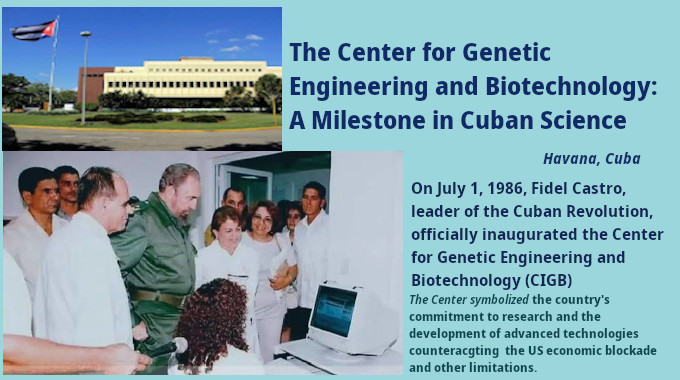
On July 1, 1986, Fidel Castro, leader of the Cuban Revolution, officially inaugurated the Center for Genetic Engineering and Biotechnology (CIGB) in Havana. This event not only marked a milestone in Cuba’s scientific history but also symbolized the country’s commitment to research and the development of advanced technologies in a context marked by the US economic blockade and other limitations.
The 1980s were a crucial period for Cuba, a time when the country faced serious economic and social difficulties. Despite these adversities, the Castro government sought new paths to development, making science and technology strategic pillars for the nation’s future. The CIGB was conceived as a response to the need to diversify the economy and strengthen the health and agricultural sectors through biotechnology.
The CIGB was created with the goal of developing biotechnological products that could improve public health and agricultural production in Cuba. Some of its main functions included:
- Research and Development: Promoting research in molecular genetics and biotechnology to create innovative solutions in medicine and agriculture.
- Drug Production: Developing and producing vaccines and biological treatments, positioning itself as a leader in drug production in Latin America.
- International Collaborations: Establishing links with scientific institutions in other countries, promoting the exchange of knowledge and technologies.
Since its inauguration, the CIGB has achieved several significant milestones:
- Vaccines: The development of vaccines against diseases such as meningitis and hepatitis B has substantially improved public health in Cuba and other countries.
- International Projects: Participation in collaborative research projects has allowed Cuban scientists to contribute to global biotechnology, increasing the country’s visibility and prestige in the scientific community.
- Agricultural Innovations: Crops resistant to pests and diseases have been developed, increasing agricultural productivity and improving food security on the island.
The impact of the CIGB on Cuban society has been profound. The ability to develop its own technologies has allowed Cuba to be less dependent on imports, generating a sense of national pride. Furthermore, biotechnology has become a strategic sector for the Cuban economy, especially in times of crisis.
The inauguration of the Center for Genetic Engineering and Biotechnology in 1986 is a testament to Cuba’s resilient spirit and its commitment to science as an engine of development. Through innovation and research, the CIGB has demonstrated that, even under adverse conditions, it is possible to achieve significant advances that benefit both the Cuban population and the international community. The history of the CIGB continues to evolve, and its legacy endures as a symbol of struggle and dedication to a better future.