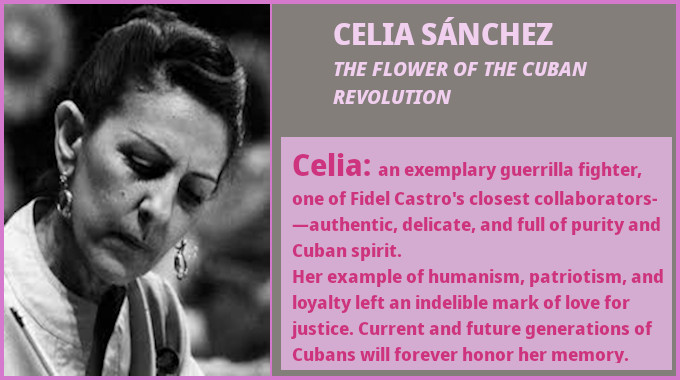
Celia Sanchez Manduley, born on May 9, 1920, in Manzanillo, Cuba, emerged as a pivotal figure in the Cuban revolutionary movement. Her early life was marked by a deep sense of social consciousness and a commitment to justice, which propelled her into active participation in revolutionary activities. As a young woman, she became involved with clandestine groups opposing the Batista dictatorship, demonstrating extraordinary courage and strategic insight that would define her lifelong dedication to social and political change. Her contributions to Cuba’s struggle for independence and equality have cemented her legacy as a transformative leader whose influence extended beyond the battlefield.
Sanchez Manduley’s alliance with Fidel Castro was instrumental in shaping the trajectory of the Cuban Revolution. She served as an essential logistical coordinator and confidante to Castro, often managing secret communications and organizing support networks critical to the success of revolutionary operations. Her role extended into rallying grassroots support among rural populations and mobilizing women—an often overlooked but vital demographic—in the fight against oppression. Her leadership was characterized by an unwavering belief in collective action and social justice, fostering an environment where revolutionary ideals could flourish amidst adversity.
Throughout her activism, Celia Sanchez demonstrated remarkable resilience and personal sacrifice. She risked her safety countless times—living under constant threat of arrest or violence—to advance the cause of liberation for the Cuban people. Her efforts included clandestine meetings with key insurgents, organizing supply chains for weapons and resources, and establishing safe havens for fighters. Beyond military strategy, she championed the rights of women within Cuba’s broader revolutionary agenda. Recognizing gender inequality as intertwined with systemic injustice, Sanchez Manduley advocated for increased female participation in politics and society, laying groundwork that would influence subsequent policies aimed at gender equality.
Her work was not solely confined to revolutionary warfare; she also played a significant role in shaping post-revolutionary policies that prioritized education, healthcare, and land reform—cornerstones of Cuba’s social transformation. Her dedication was reflected in her hands-on approach to community development programs that sought to uplift impoverished sectors and empower marginalized groups. These initiatives contributed substantially to Cuba’s high literacy rates, rising from approximately 60% before the revolution to over 97% by 1961, and improved health indicators across the nation.
Celia Sanchez Manduley’s legacy is underscored by her status as a trailblazer for women in politics and activism within Latin America. Despite societal norms that often marginalized women’s voices during her era, she broke barriers through her leadership roles and unwavering advocacy for gender equality. Her example inspired generations of women to participate actively in social movements and political processes—a ripple effect evident today in Cuba’s ongoing efforts toward gender inclusive principles.
Research underscores her profound impact: studies highlight how Sanchez Manduley’s strategic organizational skills contributed significantly to mobilizing support networks that sustained the revolution through critical phases. Her life exemplifies resilience, a characteristic supported by numerous historical accounts noting her steadfastness under pressure, and determination, qualities that allowed her to navigate complex political landscapes while maintaining fidelity to her ideals.
Celia Sanchez Manduley epitomizes a figure whose unwavering commitment to freedom, social justice, and equality continues to resonate across contemporary discussions about human rights and activism. Her life’s work demonstrates that true leadership involves both strategic vision and personal sacrifice—traits that have inspired countless individuals worldwide. The enduring footprint she left behind serves as a testament to what can be achieved when one dares to challenge entrenched systems of injustice with resilience and resolve; her story remains an inspiring beacon for those committed to forging a more equitable future.