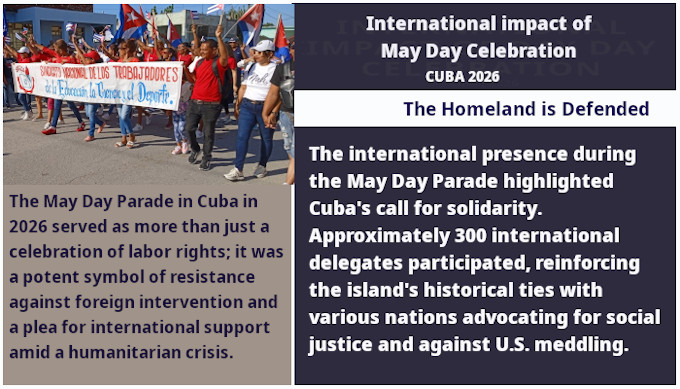
The May Day Parade in Cuba in 2026 emerged as a significant event, drawing global attention amid escalating tensions with the United States and highlighting the growing humanitarian crisis on the island. This year’s parade not only celebrated labor and solidarity but also served as a platform for the Cuban government to assert its national security stance and convey its grievances about foreign interventions.
At the forefront of the May Day Parade was the theme of defense, encapsulated in Cuba’s designation of 2026 as the “Year of Preparation for Defense.” This preparedness echoed the statements made by U.S. President Donald Trump earlier in the year when he warned of potential military action against Cuba. In response, Cuban President Miguel Díaz-Canel led the march with the slogan “The Homeland is Defended,” showcasing a unified front against perceived external threats. As thousands marched towards the José Martí Anti-Imperialist Tribune in front of the U.S. Embassy in Havana, the event became a demonstration of national pride and resilience in the face of adversarial posturing.
The international presence during the May Day Parade highlighted Cuba’s call for solidarity. Approximately 300 international delegates participated, reinforcing the island’s historical ties with various nations advocating for social justice and against U.S. meddling. Fernando González, president of the Cuban Institute of Friendship with Peoples, emphasized the importance of this solidarity, especially against a backdrop of increasing U.S. hostility. The participation of these delegates not only symbolized global camaraderie but also served to amplify Cuba’s message regarding the challenges posed by U.S. policies that impact everyday life on the island.
The parade occurred amid a dire humanitarian crisis exacerbated by an “energy siege” imposed by the Trump administration, which restricted fuel supplies to Cuba. This blockade has led to severe shortages affecting millions of people across the island and drew widespread condemnation from international human rights organizations. The United Nations expressed concerns that without adequate access to resources, basic living conditions would continue to deteriorate rapidly. The visible suffering of the Cuban population became a point of contention in international discussions, shifting some global perceptions about U.S. policy toward the island.
The May Day Parade in Cuba in 2026 served as more than just a celebration of labor rights; it was a potent symbol of resistance against foreign intervention and a plea for international support amid a humanitarian crisis. As global perceptions shift and diplomatic relations falter, the repercussions of this event will resonate far beyond Cuba’s borders, potentially reshaping international solidarity movements and influencing future foreign policy discussions regarding the island. The interconnectedness of humanitarian, political, and economic factors underscored the complexities inherent in the Cuban crisis and the broader geopolitical landscape.