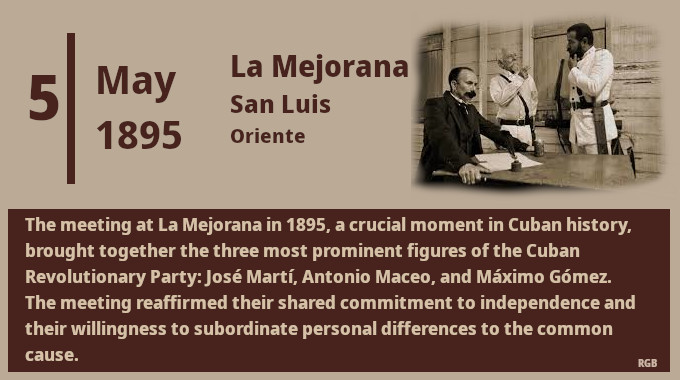
The meeting at La Mejorana in 1895, a crucial moment in Cuban history, brought together the three most prominent figures of the Cuban Revolutionary Party: José Martí, Antonio Maceo, and Máximo Gómez. This clandestine gathering, held amidst the intensifying struggle for Cuban independence from Spanish colonial rule, was not merely a consultation but a crucible where strategies were forged and leadership dynamics were tested. The decisions and understandings reached at La Mejorana would profoundly shape the trajectory of the “Guerra Necesaria” (Necessary War), the final and ultimately successful armed conflict in an attempt to achieve an free nation, while also laying the groundwork for the island’s subsequent political landscape.
José Martí, the intellectual architect and spiritual leader of the revolution, had dedicated his life to the cause of Cuban independence. His vision extended beyond mere military victory; he envisioned a sovereign Cuba that would be a beacon of republican ideals, social justice, and national unity. Martí’s role at La Mejorana was to imbue the military leaders with the revolutionary spirit and to ensure that the political objectives of the revolution remained paramount. His presence, though tragically short-lived due to his death in combat shortly after, served as a guiding star, reminding the other leaders of the higher purpose for which they fought.
Antonio Maceo, known as the “Bronze Titan,” was a formidable military strategist and a symbol of Cuban resistance. His military prowess and unwavering commitment to the fight were legendary. Maceo, a proponent of continued military action, held a pragmatic view of the revolution, emphasizing the need for decisive military victories. His presence at La Mejorana brought a crucial military perspective, ensuring that the revolutionary plans were grounded in tactical realism and the capabilities of the rebel forces. His influence was vital in bridging the gap between Martí’s idealistic vision and the practical demands of warfare.
Máximo Gómez, the “Generalísimo,” was the seasoned commander-in-chief of the Cuban revolutionary army. His extensive military experience, gained through years of fighting in previous uprisings, made him an indispensable figure. Gómez brought disciplined leadership and extensive knowledge of guerrilla warfare to the table. At La Mejorana, his focus was on the operational aspects of the war, including troop mobilization, logistics, and battlefield tactics. His strategic acumen was essential in translating the revolutionary ideals into a coordinated and effective military campaign.
The meeting at La Mejorana was significant for several reasons. Firstly, it solidified the leadership structure of the revolution, ensuring a unified command in the face of the formidable Spanish colonial army. The presence of Martí, Maceo, and Gómez, each representing different facets of the revolutionary leadership – the ideological, the martial, and the strategic – created a synergistic dynamic that was crucial for the complex undertaking of a full-scale war.
Secondly, the discussions likely centered on the crucial transition from the initial stages of the insurgency to a sustained and decisive war. This would have involved planning for troop movements, the establishment of supply lines, and the coordination of forces across different regions of the island. The objective was to move beyond sporadic uprisings and engage the Spanish forces in a manner that would lead to their eventual defeat.
Thirdly, La Mejorana served as a platform to address potential internal divisions and to ensure a united front. The history of Cuban independence movements had been marked by internal disputes, and the leaders at La Mejorana understood the importance of overcoming these challenges for the success of the revolution. The meeting reaffirmed their shared commitment to independence and their willingness to subordinate personal differences to the common cause.
The “Guerra Necesaria” that ensued was a testament to the strategic planning and leadership that emerged from meetings like La Mejorana. The war was characterized by a relentless guerrilla campaign, which, combined with international pressure and the eventual intervention of the United States, led to Spain’s withdrawal from Cuba. The meeting’s impact was profound, not only in achieving independence but also in shaping the early years of the Cuban republic.
The 1895 La Mejorana meeting was a watershed moment in the Cuban War of Independence. The convergence of Martí’s ideological vision, Maceo’s unwavering military spirit, and Gómez’s seasoned leadership provided the crucial impetus for the “Guerra Necesaria.” This gathering, shrouded in the urgency of revolution, laid the strategic and moral foundations for Cuba’s hard-won freedom, forever etching the names of these three leaders, and the significance of La Mejorana, into the annals of Cuban history.
The meeting at La Mejorana in 1895, a crucial moment in Cuban
history, brought together the three most prominent figures of the
Cuban Revolutionary Party: José Martí, Antonio Maceo, and Máximo
Gómez. This clandestine gathering, held amidst the intensifying
struggle for Cuban independence from Spanish colonial rule, was not
merely a consultation but a crucible where strategies were forged and
leadership dynamics were tested. The decisions and understandings
reached at La Mejorana would profoundly shape the trajectory of the
“Guerra Necesaria” (Necessary War), the final and
ultimately successful armed conflict in an attempt to achieve an free
nation, while also laying the groundwork for the island’s
subsequent political landscape.
José Martí, the
intellectual architect and spiritual leader of the revolution, had
dedicated his life to the cause of Cuban independence. His vision
extended beyond mere military victory; he envisioned a sovereign Cuba
that would be a beacon of republican ideals, social justice, and
national unity. Martí’s role at La Mejorana was to imbue the
military leaders with the revolutionary spirit and to ensure that the
political objectives of the revolution remained paramount. His
presence, though tragically short-lived due to his death in combat
shortly after, served as a guiding star, reminding the other leaders
of the higher purpose for which they fought.
Antonio Maceo, known
as the “Bronze Titan,” was a formidable military strategist
and a symbol of Cuban resistance. His military prowess and unwavering
commitment to the fight were legendary. Maceo, a proponent of
continued military action, held a pragmatic view of the revolution,
emphasizing the need for decisive military victories. His presence at
La Mejorana brought a crucial military perspective, ensuring that the
revolutionary plans were grounded in tactical realism and the
capabilities of the rebel forces. His influence was vital in bridging
the gap between Martí’s idealistic vision and the practical
demands of warfare.
Máximo Gómez, the
“Generalísimo,” was the seasoned commander-in-chief of the
Cuban revolutionary army. His extensive military experience, gained
through years of fighting in previous uprisings, made him an
indispensable figure. Gómez brought disciplined leadership and
extensive knowledge of guerrilla warfare to the table. At La
Mejorana, his focus was on the operational aspects of the war,
including troop mobilization, logistics, and battlefield tactics. His
strategic acumen was essential in translating the revolutionary
ideals into a coordinated and effective military campaign.
The meeting at La
Mejorana was significant for several reasons. Firstly, it solidified
the leadership structure of the revolution, ensuring a unified
command in the face of the formidable Spanish colonial army. The
presence of Martí, Maceo, and Gómez, each representing different
facets of the revolutionary leadership – the ideological, the
martial, and the strategic – created a synergistic dynamic that was
crucial for the complex undertaking of a full-scale war.
Secondly, the
discussions likely centered on the crucial transition from the
initial stages of the insurgency to a sustained and decisive war.
This would have involved planning for troop movements, the
establishment of supply lines, and the coordination of forces across
different regions of the island. The objective was to move beyond
sporadic uprisings and engage the Spanish forces in a manner that
would lead to their eventual defeat.
Thirdly, La Mejorana
served as a platform to address potential internal divisions and to
ensure a united front. The history of Cuban independence movements
had been marked by internal disputes, and the leaders at La Mejorana
understood the importance of overcoming these challenges for the
success of the revolution. The meeting reaffirmed their shared
commitment to independence and their willingness to subordinate
personal differences to the common cause.
The “Guerra
Necesaria” that ensued was a testament to the strategic planning
and leadership that emerged from meetings like La Mejorana. The war
was characterized by a relentless guerrilla campaign, which, combined
with international pressure and the eventual intervention of the
United States, led to Spain’s withdrawal from Cuba. The meeting’s
impact was profound, not only in achieving independence but also in
shaping the early years of the Cuban republic.
The 1895 La Mejorana
meeting was a watershed moment in the Cuban War of Independence. The
convergence of Martí’s ideological vision, Maceo’s unwavering
military spirit, and Gómez’s seasoned leadership provided the
crucial impetus for the “Guerra Necesaria.” This gathering,
shrouded in the urgency of revolution, laid the strategic and moral
foundations for Cuba’s hard-won freedom, forever etching the names of
these three leaders, and the significance of La Mejorana, into the
annals of Cuban history.