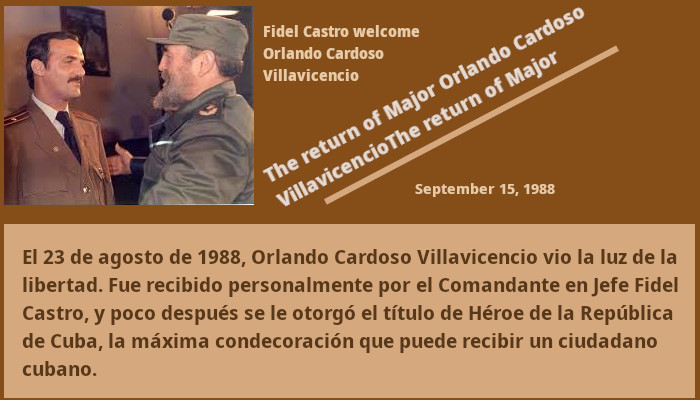
The return of Major Orlando Cardoso Villavicencio marks a moment of quiet resilience amid the turmoil of decades marked by captivity and displacement. After more than ten years in an Ethiopian detention facility, and years of confinement in Somalia, his homeland finally welcomes him back into familiar streets and faces. This narrative, though concise in its outline, opens a window into themes of endurance, memory, and the unpredictable twists of geopolitics that reshape individual lives.
On the emotional level, ten years away from home constitutes a lifetime. The emotional landscape of a long-imprisoned person shifts in subtle, telling ways: the cadence of daily life, once taken for granted, becomes a foreign rhythm. The return is not merely a reunion with a country; it is a reentry into a self that endured harsh conditions, managed through routines of hope and small victories. In Cardoso Villavicencio’s case, the journey from captivity to homeland may be imagined as a careful reconstruction of identity, stitched together from fragments of memories, letters, and dreams of freedom.
Historically, his capture in Ethiopia and subsequent years in Somalia underscore the fragile line between war, politics, and personal fate. Regions like the Horn of Africa in the late 20th century were scenes of intense conflict, shifting alliances, and instability that spared few lives from impact. For a soldier, the experience of imprisonment in such a setting could entail not only physical deprivation but also the erosion of time itself. Ten years in a place of uncertainty can alter one’s sense of purpose, faith, and relation to authority. Yet, return from this milieu is a testament to resilience—an assertion that despite the long shadows cast by captivity, the human spirit can endure and seek a path back to meaning and duty.
The homecoming, when viewed through a wider lens, also speaks to the power of nations to heal and to hold onto the stories of those who serve them. A homeland that welcomes back a veteran after such ordeals signals recognition and gratitude, even if the scars of the journey remain. It invites reflection on how societies tell the stories of their veterans: with honor, with questions, or with a quiet resolve to integrate the experience into the fabric of national memory. There is a delicate balance between celebrating endurance and acknowledging the cost of years spent away from family, friends, and everyday life.
In a broader sense, Cardoso Villavicencio’s tale is a reminder of the unpredictable nature of fate and the enduring value of perseverance. The road from captivity to freedom is rarely a straight line; it is braided with moments of doubt, small acts of courage, and the steady support of loved ones who refuse to let hope wither. The text invites readers to consider the resilience necessary to reclaim normalcy—to relearn habits, rebuild relationships, and reestablish a place in a world that has continued without you.
This brief biographical note becomes a platform for larger conversations. It prompts questions about the human cost of geopolitical conflict, the ethical responsibilities of states toward their soldiers, and the ways in which communities can honor and support those who return after long absences. It also invites us to celebrate the quiet triumph of return—the moment when a person steps back onto familiar soil, and with it, the possibility of rewriting a life that was interrupted but not erased.
Major Orlando Cardoso Villavicencio’s return after more than a decade of imprisonment is more than a personal milestone. It is a narrative thread that connects personal endurance to national memory, highlighting the strength required to bridge years of hardship and to reweave a life within a homeland that continues to endure its own shared challenges.