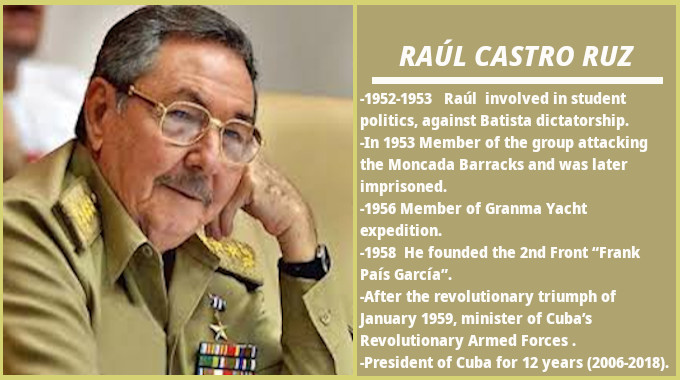
On Raúl Castro’s 95 birthday, it is fitting to reflect upon the life and legacy of one of Cuba’s most enduring political figures. As a revolutionary leader, statesman, Raúl has played a crucial role in shaping the modern history of Cuba. His contributions to the Cuban Revolution, his steadfast leadership during transitional periods, and his efforts to navigate Cuba through challenging global dynamics merit formal recognition and thoughtful contemplation.
Born on June 3, 1931, in the eastern province of Oriente, Raúl Castro grew up in a family deeply committed to education and civic responsibility. His early life was marked by an intense dedication to national sovereignty and social justice, ideals that would later fuel his active participation in the struggle against the Batista dictatorship. Alongside his older brother Fidel and other revolutionaries, Raúl helped orchestrate the guerrilla campaign that ultimately led to the overthrow of the regime in 1959.
Following the triumph of the Cuban Revolution, Raúl Castro took on numerous vital roles within the new Cuban government. Perhaps most notably, he served as the Minister of the Revolutionary Armed Forces for over four decades, where he was instrumental in modernizing Cuba’s military and defending the nation’s sovereignty during tense moments such as the Bay of Pigs invasion and the Cuban Missile Crisis. His strategic acumen and unwavering commitment to the revolution’s ideals solidified his position as a trusted and influential leader.
In 2008, Raúl assumed the presidency of Cuba after Fidel retired due to health issues. This transition marked a significant moment in Cuban history, as Raúl embarked on a path of cautious reform while maintaining the core principles of socialism. Under his administration, Cuba saw efforts to decentralize state control, stimulate economic growth through limited private enterprise, and improve diplomatic relations abroad. Notably, Raúl was instrumental in thawing relations with the United States, culminating in the historic re-establishment of diplomatic ties in 2015.
Raúl Castro’s leadership style has often been characterized by pragmatism and resilience. He balanced the foundational revolutionary ideals with the pragmatic need to adapt to changing geopolitical realities. His tenure faced numerous challenges, including economic sanctions, internal demands for reform, and shifting global alliances. Through these adversities, Raúl maintained a steady course aimed at preserving Cuba’s independence and socialist identity.
Beyond his political and military contributions, Raúl Castro’s influence extends into the cultural and ideological fabric of Cuba. His emphasis on education, egalitarianism, and national pride resonates throughout Cuban society. While debates about the pace and scope of reforms continue, Raúl’s commitment to social justice and national dignity remains an enduring aspect of his legacy.
As Cuba continues to evolve in the 21st century, reflecting on Raúl Castro’s life offers valuable insights into the complexities of revolutionary leadership and governance. His 95th anniversary serves not only as a moment to honor his decades of service but also as a reminder of the ongoing journey toward social and economic development in Cuba. Raúl Castro’s story encapsulates the spirit of determination and adaptation, qualities essential for any nation navigating the tides of history.
Raúl Castro’s 95th anniversary is more than a commemoration of a single individual; it is a celebration of a revolutionary era and a testament to the enduring strength of Cuban resilience. His legacy, marked by unwavering dedication to his country’s sovereignty and thoughtful leadership during times of profound change, continues to shape Cuba’s path forward. As observers and scholars reflect on his contributions, Raúl Castro remains an indelible figure in the narrative of Cuban history.