On June 2, 1987, a significant step was taken towards the comprehensive and sustainable development of Cuba’s mountainous and hard-to-reach regions with the establishment of the Plan Turquino. This program, initiated by the Cuban Council of State, was designed to address the unique challenges faced by the country’s most remote areas, fostering social, economic, and environmental progress in regions that had long been marginalized.
Cuba, an island nation characterized by diverse geographic features, includes prominent mountainous zones such as the Sierra Maestra range, where Mount Turquino, the highest peak in Cuba, is located. These regions are home to communities that have historically experienced isolation due to difficult terrain and limited transportation infrastructure, hindering access to essential services and economic opportunities.
Prior to the implementation of the Plan Turquino, many of these areas suffered from underdevelopment, including inadequate healthcare, education, and infrastructure. Agricultural activities were often constrained by the steep slopes and poor soils, while environmental degradation posed additional threats to both livelihoods and biodiversity. Recognizing the strategic importance of addressing these challenges, Cuban authorities sought to create a holistic program aimed at integrating these regions into the broader national development framework.
Such are the cases of Los Negros, La Torcaza districts, mountainous zones in Contramaestre municipality in Santiago de Cuba province, which have been benefited through the comprehensive initiative conceived by the Plan Turquino to promote sustainable development across Cuba’s hard-to-reach places.
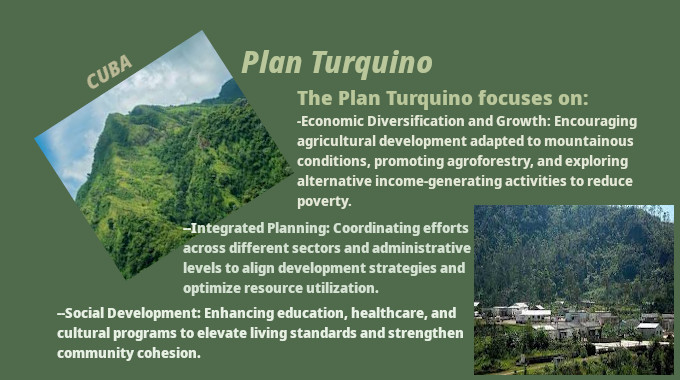
The Plan Turquino focus on enhancing the quality of life for local populations by addressing several key objectives:
1. Economic Diversification and Growth: Encouraging agricultural development adapted to mountainous conditions, promoting agroforestry, and exploring alternative income-generating activities to reduce poverty.
2. Infrastructure Improvement:Developing transport networks and basic services to improve accessibility and connectivity, thus facilitating the movement of goods and people and enabling better delivery of public services.
3. Environmental Conservation: Implementing measures to protect fragile ecosystems and promote the sustainable use of natural resources to ensure long-term ecological balance.
4. Social Development: Enhancing education, healthcare, and cultural programs to elevate living standards and strengthen community cohesion.
5. Integrated Planning: Coordinating efforts across different sectors and administrative levels to align development strategies and optimize resource utilization.
The execution of the Plan Turquino involved mobilizing governmental institutions, local communities, and experts in various fields. Emphasis was placed on participatory approaches that incorporated the voices and needs of the inhabitants of these areas. Investments were directed toward improving rural infrastructure, such as roads and water supply systems, and strengthening agricultural practices adapted to mountainous landscapes.
Furthermore, the plan highlighted the importance of inclusive governance, recognizing that the participation of local populations is essential for the success and sustainability of development initiatives. It underscored the state’s commitment to ensuring equitable development and improving the living conditions of all its citizens, regardless of geographic location.
Decades after its inception, the Plan Turquino remains a reference point in Cuba’s development history. It demonstrated that targeted, well-coordinated policies could transform marginalized regions, turning challenges associated with geography into opportunities for growth and sustainability.
The establishment of the Plan Turquino on June 2, 1987, was a decisive moment in Cuba’s quest for inclusive and sustainable development. By focusing on the specific needs of mountainous and hard-to-access regions, the program addressed longstanding disparities and laid the groundwork for improved socio-economic conditions and environmental conservation. As Cuba continues to evolve, the principles embodied in the Plan Turquino continue to inspire efforts aimed at balanced and sustainable national development.