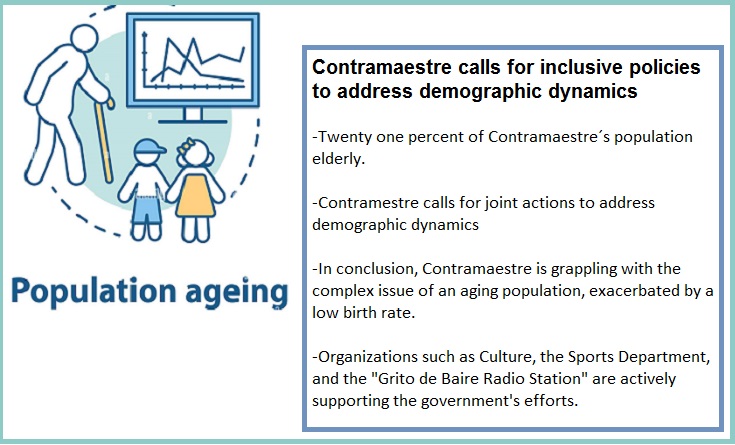
The municipality of Contramaestre in Santiago de Cuba is facing the challenge of a high rate of population aging, with 21.1 percent of the population being elderly. This demographic trend, coupled with a low birth rate, calls for integrated actions to address the needs of the aging population.
The municipality currently has facilities such as an elderly home, two grandparents’ homes, and a geriatrics service in a local hospital. Additionally, there are social workers in place to provide care to the elderly, particularly those in vulnerable situations. However, despite the presence of human resources, there are structural and resource difficulties in providing comprehensive care to the aging population in the municipality.
One of the major challenges in Contramaestre is the lack of wide-ranging coordination among the sectors responsible for addressing demographic dynamics. While there are systematic visits to elderly individuals living alone and classified as vulnerable, more action is needed from the Basic Health Teams.
On a positive note, organizations such as Culture, the Sports Department, and the “Grito de Baire Radio Station” have actively supported the government’s efforts to address the needs of the aging population. They have been involved in promoting healthy lifestyles and social inclusion for the elderly.
In terms of the specific challenges at the territorial level, there is a need to improve the accessibility of comprehensive care services and enhance coordination among the various stakeholders involved in elderly care. Moreover, there is a need for the training of health personnel to meet the specific needs of older adults, as the “Patricio Lumumba” people’s council has a significant number of elderly residents.
In conclusion, Contramaestre is grappling with the complex issue of an aging population, exacerbated by a low birth rate. Integrated actions are required to address the needs of the elderly and provide comprehensive care. Greater coordination among different sectors, particularly the involvement of Basic Health Teams, is necessary.