
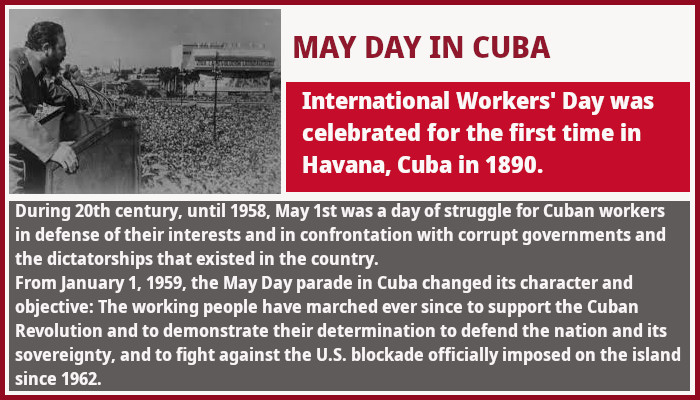
May Day, or International Workers’ Day, holds significant cultural, political, and historical importance in Cuba. Celebrated annually on May 1st, this day serves as a powerful symbol of solidarity among workers and an affirmation of the revolutionary spirit that has characterized the island nation since the 1959 revolution. The celebration of May Day in Cuba reflects not just labor rights, but also broader themes of national identity, social justice, and socio-political achievements.
The observance of May Day has its roots in the labor movements of the late 19th century, particularly the fight for an eight-hour workday in the United States. However, for Cuba, the day took on a unique significance following the triumph of the Cuban Revolution in 1959, led by Fidel Castro. The revolutionary government sought to establish a socialist state that prioritized the rights of workers and the redistribution of wealth, turning May Day into a national holiday that celebrates both the achievements of the revolution and ongoing commitments to social justice and equality.
On May Day, Cuba transforms into a vibrant array of color and enthusiasm. Mass rallies are held in cities across the country, most notably in Havana, where thousands gather in the Plaza de la Revolución (Revolution Square). Participants, including workers from various sectors, students, and members of the Communist Party, march together, proudly displaying banners that honor labor rights and revolutionary ideals. The atmosphere is one of unity, as Cubans come together to celebrate the contributions of the working class to the nation’s development.
The celebration is not merely a routine demonstration; it serves as a reaffirmation of the social achievements attained since the revolution. Speeches from state leaders highlight the government’s commitment to education, healthcare, and labor rights, reinforcing the message that workers are the backbone of the Cuban state. Additionally, international guests often participate, symbolizing global solidarity among labor movements.
May Day in Cuba also has a profound political dimension. It is a platform for the government to showcase its resistance to external pressures, particularly from the United States. The longstanding U.S. embargo and various attempts to undermine the Cuban system are often addressed in speeches, framing the celebration as a defiance against imperialism. This aspect reinforces the narrative that the struggles of Cuban workers are interconnected with global labor issues, particularly in countries facing oppression or exploitation.
In addition to its political ramifications, May Day is a cultural celebration that reflects the values ingrained in Cuban society. Themes of collective strength, unity, and resilience are celebrated not only through political rhetoric but also through music, dance, and art. The events are characterized by lively performances and community spirit, showcasing the rich cultural tapestry that defines Cuba.
Moreover, May Day serves as a reminder of the ongoing challenges faced by workers, both at home and globally. It ignites discussions about labor rights, fair wages, and working conditions, sparking debates that continue beyond the day of celebration.
May Day in Cuba transcends the simple commemoration of labor; it is a multifaceted celebration that embodies the nation’s revolutionary heritage, political resilience, and cultural identity. It echoes the ideals of solidarity and social justice, reminding both Cubans and the world of the ongoing struggle for workers’ rights. As such, May Day remains an essential part of Cuba’s national consciousness, a day where the past, present, and future of labor intersect, fostering a sense of unity in the face of adversity.