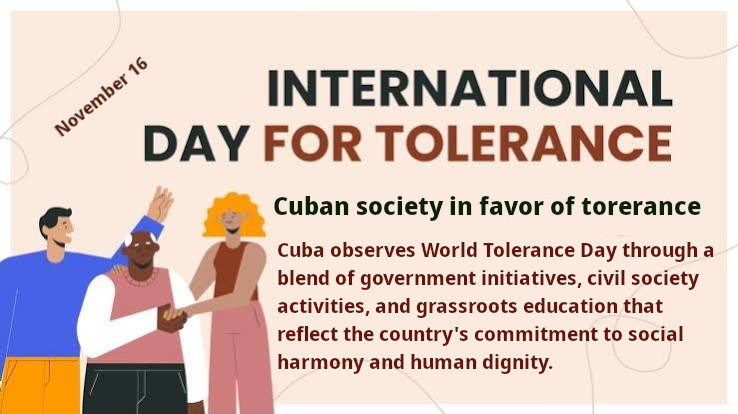
Cuba observes World Tolerance Day through a blend of government initiatives, civil society activities, and grassroots education that reflect the country’s commitment to social harmony and human dignity. While the island nation is often noted for its stance on health, education, and universal access to services, it also advances a culture of respect for diversity, dialogue, and peaceful coexistence.
A cornerstone of Cuba’s approach is its emphasis on universal access to education. From early schooling through higher education, Cuban curricula include lessons on tolerance, human rights, and international solidarity. Teachers are trained to foster critical thinking, empathy, and respect for others, regardless of differences in race, religion, or gender. This educational foundation helps young people understand the value of pluralism and the importance of standing against discrimination in any form.
Cultural exchanges and national festivals play a vital role in promoting tolerance. Cuba hosts a range of events that showcase the country’s diverse cultural landscape, including music, dance, and literature from different regions and communities. These gatherings create spaces where people can experience shared joy and learn from one another’s traditions. Such cultural diplomacy reinforces the idea that diversity strengthens society rather than weakens it.
Civil society organizations, including faith groups, community centers, and non-governmental groups, contribute to World Tolerance Day by organizing dialogue forums, workshops, and public discussions. These activities encourage citizens to engage in constructive conversations about prejudice, xenophobia, and social exclusion. By promoting open dialogue, these groups help demystify difference and build trust among neighbors, colleagues, and fellow citizens.
Healthcare and social services in Cuba also reflect a tolerance-centered approach. Medical professionals are trained to treat patients with dignity and respect, independent of background, nationality, or beliefs. Community clinics and outreach programs often focus on marginalized populations, ensuring access to essential services and information. This inclusive ethos helps reduce stigma and fosters a sense of belonging for all residents.
Media, too, participates in the observance of World Tolerance Day. State and independent media outlets alike cover stories of cooperation, reconciliation, and mutual aid. Editorials, feature pieces, and public-service announcements highlight the importance of tolerance and the harm caused by discrimination. By shaping public discourse, the media encourages citizens to reflect on their own attitudes and to act with empathy.
World Tolerance Day coincides with broader national efforts to advance social justice and gender equality. Government agencies and solidarity networks work on campaigns that address gender-based violence, LGBTQ+ rights, and racial equity. While policies vary in scope and pace, the continued attention to these issues demonstrates Cuba’s ongoing commitment to creating a more inclusive society.
Education and tolerance are not isolated to formal schooling. Community centers, libraries, and youth programs offer activities that promote mutual understanding. Language exchange groups, reading clubs, and volunteer initiatives bring people together across generations and backgrounds. Such grassroots efforts reinforce the message that tolerance is a daily practice, not a single event.
Challenges exist, as in any society navigating change. Critics may point to restrictions on civil liberties or the pace of policy reforms. Yet, on World Tolerance Day, the emphasis remains on shared humanity and the practical steps Cuban institutions take to uphold it. The day serves as a reminder that tolerance requires ongoing effort, dialogue, and cooperation across all sectors of society.
In sum, Cuba honors World Tolerance Day by weaving together education, culture, civil society, healthcare, media, and public policy into a cohesive effort. The result is a national culture that seeks to acknowledge differences, defend dignity, and foster a community where all people can live with respect and opportunity.