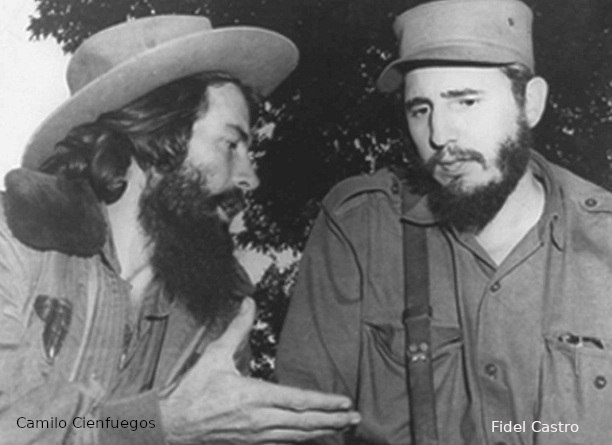
Camilo Cienfuegos, a charismatic and fearless figure, stands as one of the most celebrated heroes of Cuba’s struggle for liberty against the Batista regime. Although his life was brief, his deeds and leadership helped shape the trajectory of the Cuban Revolution and inspired a generation to dream of a freer, more just nation. This essay highlights the notable feats of Camilo Cienfuegos during the liberation war and the enduring impact of his contributions.
Camilo’s rise within the revolutionary movement began in the early 1950s, as he aligned with the 26th of July Movement led by Fidel Castro. He quickly earned a reputation for his practical courage, people-centered leadership, and ability to rally troops. His early involvement in guerrilla operations demonstrated a blend of tactical savvy and unwavering commitment to the cause. From the mountains to the plains, Camilo’s presence boosted morale, and his ability to communicate with soldiers and civilians alike helped to bridge the gap between armed struggle and the broader revolutionary objectives.
One of Camilo’s most memorable feats came during the crucial years of 1958, when the revolution intensified its push against Batista’s forces. He played a key role in several offensives that disrupted the Batista military structure and weakened the regime’s grip on power. Camilo’s leadership during reconnaissance missions, ambushes, and rapid assaults showcased his skill in coordinating small, agile units and exploiting the terrain to strike effectively. His bravery under fire and his insistence on protecting civilians earned him respect not only from fellow fighters but also from local communities who saw in him a protector and a symbol of their aspirations.
Another defining moment was his involvement in the coastal operations and the pursuit of strategic targets that hampered Batista’s supply lines. The guerrilla strategy employed by the rebels depended on mobility, surprise, and the ability to sustain momentum. Camilo’s adeptness at navigating difficult landscapes, along with his willingness to take calculated risks, ensured that essential routes remained under pressure. This operational pressure contributed to the broader collapse of Batista’s control and the eventual call for reform and transition.
Camilo’s influence extended beyond battlefield achievements. He embodied the revolutionary ideal of unity and fairness, treating prisoners with a sense of humanity that contrasted with the brutalities of war. He fostered a culture of discipline within his units, emphasizing the importance of protecting civilians and maintaining public support for the revolution. His leadership style, personable, hands-on, and relentlessly optimistic, helped maintain cohesion among fighters who faced harsh conditions, long marches, and the looming threat of counterattacks.
The most enduring aspect of Camilo Cienfuegos’ legacy lies in the moral and inspirational power he provided to the Cuban people. His infectious energy and unwavering conviction in a better future resonated with ordinary citizens, who saw in him a trusted champion of their rights and dignity. The infamous song and stories that circulated after his disappearance reinforced his status as a beacon of hope. Even in his absence, Camilo’s legacy continued to fuel revolutionary determination, reminding Cubans that their struggle had a human face, one of courage, humor, and steadfast devotion to justice.
Camilo Cienfuegos’ disappearance in 1959, amplified the myth of his heroism and solidified his place in Cuban memory as a symbol of the revolutionary spirit. His feats, marked by tactical acumen, fearless leadership, and a deep care for people, helped to destabilize the Batista regime and accelerate the path toward Cuba’s eventual transformation.
In reflection, Camilo Cienfuegos’ legacy is not limited to specific military achievements alone; it lies in the example he set for others. He demonstrated that courage can be compassionate, that strategic thinking can be humane, and that a movement’s strength comes from the trust and loyalty it garners from those who fight beside its leaders. The liberation war against Batista regime showcased not only a series of battles but a compelling narrative of devotion, sacrifice, and the enduring pursuit of national sovereignty. Camilo’s memory remains a touchstone for Cubans who seek a future built on dignity, freedom, and solidarity.