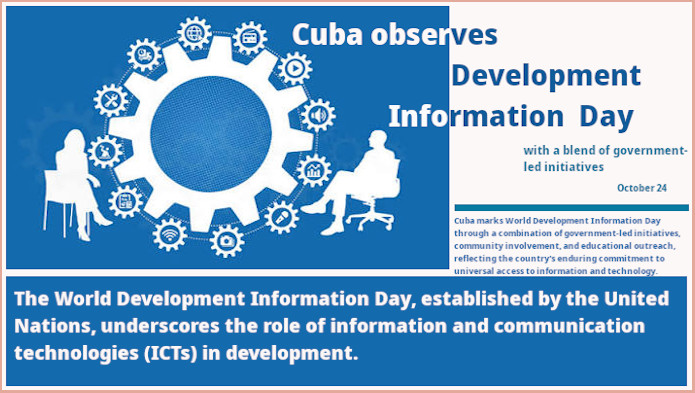
Cuba marks World Development Information Day through a combination of government-led initiatives, community involvement, and educational outreach, reflecting the country’s enduring commitment to universal access to information and technology. Although the holiday is not a global festival observed with universal participation in every nation, Cuba typically commemorates it with public events, policy announcements, and an emphasis on closing the digital divide. World Development Information Day, established by the United Nations, underscores the role of information and communication technologies (ICTs) in development.
In Cuba, where the state plays a central role in media and communications, the celebration usually aligns with national plans to expand connectivity, enhance digital literacy, and encourage the use of technology for social progress. The day offers an opportunity to showcase progress, recognize challenges, and set goals for the coming year. Cuban authorities often use the occasion to present updates from ministries and state-owned enterprises involved in information and communication.
The Ministry of Communications, together with the Cuban Institute of Telecommunications and Electronics (ETECSA) and the public telecommunication system, may announce new projects, such as expansions of broadband access in urban and rural areas, improvements in mobile networks, and efforts to increase satellite connectivity. These announcements are frequently accompanied by statistics, timelines, and demonstrations of new services or platforms.
Events typically include seminars, workshops, and training sessions aimed at teachers, students, and community leaders. The goal is to promote not only access to devices but also the skills needed to use them effectively. Programs emphasize critical thinking, online safety, and responsible use of information. In schools and universities, there is often a push to integrate ICT into curricula, encouraging students to become creators of content, not merely consumers. In many municipalities, provincial and municipal governments collaborate with state-run media and civil society organizations to bring information technology closer to citizens.
Initiatives may include free or subsidized computer classes in community centers, the distribution of affordable or donated devices, and the creation of public access points where people can use the internet to access government services, educational resources, and health information. These efforts reflect Cuba’s goal of making information and communication tools accessible even in areas with limited infrastructure.
With state media playing a central role in disseminating information, there is often a spotlight on how digital platforms can complement traditional channels. Cuba may highlight citizen journalism, online portals that provide government services, and educational channels that broadcast content across radio, television, and the internet.
The celebration can include showcases of local digital projects, virtual libraries, and archives that preserve cultural and historical materials for broader access. Cuba participates in regional conferences and forums that discuss the information society, cyber security, and the responsible use of technology. Partnerships with international organizations, universities, and neighboring countries may be highlighted, underscoring a shared commitment to closing the digital gap and promoting inclusive digital growth.
Cuba’s celebration of World Development Information Day centers on a proactive, state-led approach to expanding access to information and technology. The events emphasize education, local action, and international cooperation, while honestly confronting remaining obstacles. The day is not solely a ceremonial observance; it serves as a catalyst for ongoing efforts to build a more informed, connected, and participatory society for all Cubans.