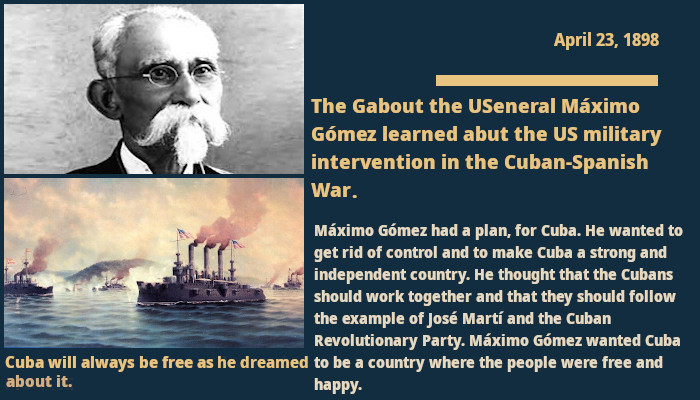
Máximo Gómez, although not born in Cuba, dedicated his life to its independence and earned the status of a Cuban through his unwavering commitment to the nation’s liberation. He passed away on June 17, 1905, leaving a profound legacy, particularly regarding his stance on the American military occupation, which he articulated primarily in letters and his Campaign Diary.
After welcoming the armistice between Spain and the United States in August 1898, Gómez expressed regret that the Americans had long been indifferent to the bloodshed of the Cuban people. With the signing of the Peace Treaty in Paris, he became increasingly vocal about his concerns regarding the future of Cuba, recognizing that while the Spanish army was leaving, Cuba was not yet free or independent due to impending American sovereignty.
In a proclamation delivered from Central Narcisa on December 29, 1898, he articulated his understanding of the transitional period, acknowledging that ending Spanish rule would give way to American governance which he deemed insufficient for true independence. Gómez recognized the complexities of the situation: the torment of a noble people was compounded by the unwanted guardianship of the Americans, which he believed could ultimately erode any goodwill.
In his diary and personal correspondence shortly after the arrival of American troops in January 1899, he lamented the invasion, feeling it came at a high cost and displayed a lack of genuine interest in the Cuban cause. He sensed that the American intervention was more of a business venture than a humanitarian act and voiced his discontent with their imposition on Cuban sovereignty. Gómez expressed the need for cautious navigation of this new landscape, insisting on unity among Cubans and Spaniards to oppose the foreign occupiers.
In correspondence with José Dolores Poyo and others, he shared his thoughts on the necessity of establishing a Republic to end foreign domination. He conveyed an urgent need to unify the nation’s energies, emphasizing the necessity of collaboration among all Cuban factions to form a strong front against interventionists. By heightening the sense of shared purpose, he hoped to create an invincible force against external machinations.
Gómez remained skeptical of American intentions, equating any potential independence granted by them to a mere gift, not reflective of the hard-fought struggles of Cubans who had already endured extreme sacrifices. He expressed that true gratitude would only follow a genuine respect for Cuban autonomy, denouncing any disrespect towards the nation as intolerable.
Throughout 1899, amid troubling challenges, he focused on establishing Cuba as a Republic free from foreign rule. He passionately recounted his enthusiastic receptions across towns and cities, believing these were affirmations of the people’s desire for autonomy rather than manifestations of adoration for him personally. As he journeyed toward Havana, he remained resolute that the successful establishment of a Republic lay in confronting foreign rule directly.
In discussions with fellow leaders, he emphasized urgency in maintaining discipline and unity against foreign powers, counteracting slanders that portrayed him as an advocate for a protectorate. Gómez remained steadfast in advocating for “absolute independence” rather than compromise solutions, declaring his commitment to a prosperous and independent Republic.
Communicating with American authorities, including Governor John Brooke, he asserted that Cuba was engaged in a fight for its independence. He urged the United States not to tarnish its legacy by imposing condescension on the Cuban nation. He addressed prevailing unease among the populace, calling for a clearly defined policy from the Americans to alleviate anxiety and foster trust as Cuba prepared for its future.
The overarching strategy Gómez pursued was clear: dismantle foreign control and solidify Cuban sovereignty through unified efforts across society. His political vision was deeply rooted in the revolutionary spirit, advocating for a singular party model based on José Martí’s Cuban Revolutionary Party, guiding cohesive political action towards the ultimate goal of completing the Revolution and achieving true independence for Cuba.
Throughout the tumultuous period of American occupation, Gómez dedicated his energies to this critical objective, understanding the delicate balance between collaboration and resistance in the pursuit of a fully independent and self-governing Republic, refusing to accept any form of foreign domination undermining Cuba’s dignity and aspirations.
Maximo Gomez on the US military intervention in Cuba in 1898