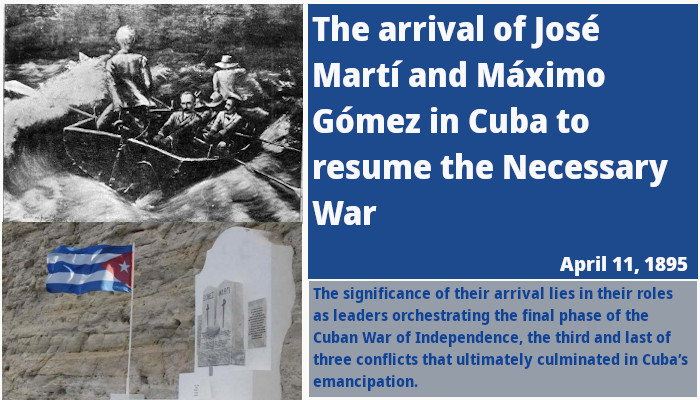
The arrival of José Martí and Máximo Gómez in Cuba on April 11, 1895, marked a pivotal moment in the history of Cuban independence. This event was not merely a physical return to the island; it symbolized the rekindling of the Cuban struggle for liberation from Spanish colonial rule. The significance of their arrival lies in their roles as leaders orchestrating the final phase of the Cuban War of Independence, the third and last of three conflicts that ultimately culminated in Cuba’s emancipation.
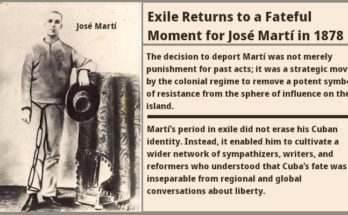
José Martí, often regarded as the intellectual architect of Cuban independence, had spent many years abroad advocating for the cause. His writings and political activity were instrumental in galvanizing support both within Cuba and internationally. Martí’s vision extended beyond mere military victory; he sought to establish a republic grounded in justice, equality, and human dignity. His return to Cuba in 1895 was the realization of his lifelong commitment to his homeland’s freedom and sovereignty.
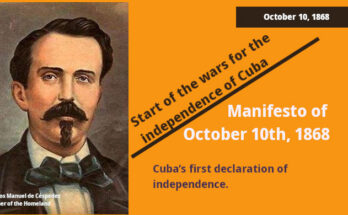
Máximo Gómez, a seasoned military leader originally from the Dominican Republic, brought invaluable strategic expertise and battlefield experience to the Cuban forces. He had previously demonstrated his capabilities during the Ten Years’ War (1868-1878), where he played a critical role as a general. Gómez’s leadership was crucial in transforming the Cuban insurgents into an effective fighting force capable of confronting the well-equipped Spanish army.
Their coordinated arrival served as a catalyst for the resumption of armed conflict, which had been temporarily dormant after the failed Ten Years’ War and the Little War (1879-1880). Upon landing, Martí and Gómez immediately undertook efforts to unify disparate revolutionary factions, consolidate resources, and plan a comprehensive campaign aimed at expelling Spanish rule. Martí’s political acumen combined with Gómez’s military discipline created a synergy that energized the independence movement.
Furthermore, their arrival carried symbolic weight that resonated deeply with the Cuban populace. After years of exile and suppression, their presence on Cuban soil signified hope and renewed determination. Martí’s stature as a national hero and Gómez’s reputation as a formidable commander inspired fighters and civilians alike. This renewed morale was essential for sustaining the protracted conflict, which demanded significant sacrifices from the Cuban people.
The timing of their arrival was also critical in the broader geopolitical context. In the mid-1890s, the United States increasingly took an interest in Cuba’s fate, influenced by economic ties and strategic considerations. Martí understood this dynamic and sought to present the Cuban struggle as a just and nationalist cause deserving of international support. His efforts laid the groundwork for garnering sympathy abroad, particularly in the United States, which would later intervene in the war.
Tragically, José Martí’s leadership was cut short when he was killed in battle just two months after their arrival, on May 19, 1895. Nevertheless, his ideological legacy and the organizational structure he helped establish endured. Máximo Gómez continued to lead the military campaign with determination, leveraging Martí’s vision as a guiding principle. Under their leadership, the Cuban forces conducted guerrilla warfare that gradually weakened Spanish control, setting the stage for eventual independence.
In conclusion, the arrival of José Martí and Máximo Gómez in Cuba on April 11, 1895, was a momentous event that revitalized the Cuban independence movement. It symbolized the fusion of intellectual vision and military expertise necessary to challenge colonial domination effectively. Their presence reinvigorated the Cuban people’s resolve, unified revolutionary efforts, and positioned the insurrection within a broader international arena. Ultimately, this pivotal moment underscored the commitment to Cuban sovereignty and paved the way for the island’s eventual liberation from Spanish rule.