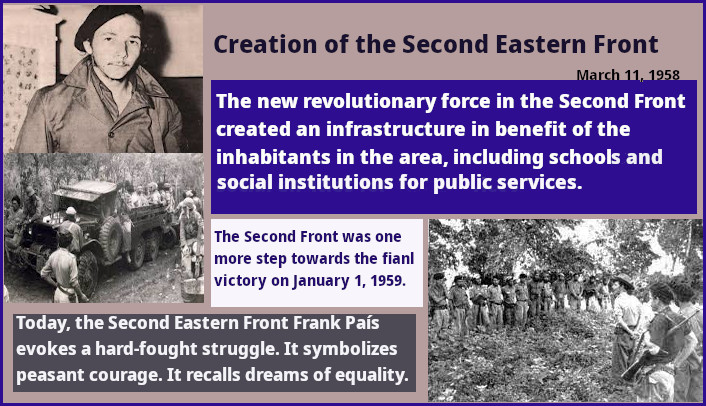
The Second Eastern Front, Frank País, emerged on March 11, 1958, Raúl Castro led it from the beginning. This key step propelled the Cuban Revolution forward. The rebels were already fighting in the Sierra Maestra with Fidel Castro. But this new front opened a second area of struggle.
The front was located in the north and east of the former Oriente province. It covered the Cristal and Turquino mountain ranges. There, the guerrillas confronted the regime of Fulgencio Batista. Batista controlled Havana and other major cities. His troops were carrying out brutal repression in the countryside.
Creating this front expanded the combat zones. Before, the resistance had been limited to a small area. Now it covered hundreds of kilometers. This demonstrated the leaders’ talent for organizing and planning attacks. Raúl Castro arrived with a group of 60 men. He came from the column that landed on Granma in 1956. He quickly multiplied his forces. He formed mobile units that harassed the enemy. They attacked convoys and military posts. Thus, Batista divided his troops. He couldn’t concentrate them in one place.
Raúl united the local rebels. Many came from the 26th of July Movement. That group, founded by Fidel, mixed people from the countryside and the cities. He also joined forces with other insurgents. For example, he coordinated with columns from the plains, like those from Santiago. This alliance strengthened the war. The fronts supported each other with weapons and food. Joint plans prevented internal clashes.
The front stood out for mobilizing ordinary people. The rebels spoke with peasants. They promised them land and justice. They set up schools in the mountains. They opened clinics to treat the sick. They formed people’s tribunals. They punished traitors, but they helped the poor. This won hearts. The population provided food, mules, and guides. They recruited hundreds of new fighters. Local youths took up arms. Women cooked and cared for the wounded. Without this support, the front wouldn’t have lasted.
Why did it matter so much? It distracted thousands of Batista’s soldiers. In December 1958, while Fidel descended from the Sierra Maestra, Raúl advanced north. He captured cities like Palma Soriano. This hastened Batista’s downfall. On January 1, 1959, the dictator fled. The revolution triumphed. Cuba underwent profound changes. The end of large landholdings. Workers’ rights. The front played a direct role in that victory.
Today, the Second Eastern Front Frank País evokes a hard-fought struggle. It symbolizes peasant courage. It recalls dreams of equality. Cubans see it as the root of their history. Guided tours take tourists along its trails. There, the ruins of camps tell the story of the struggle. It was more than a war. A new nation was born.