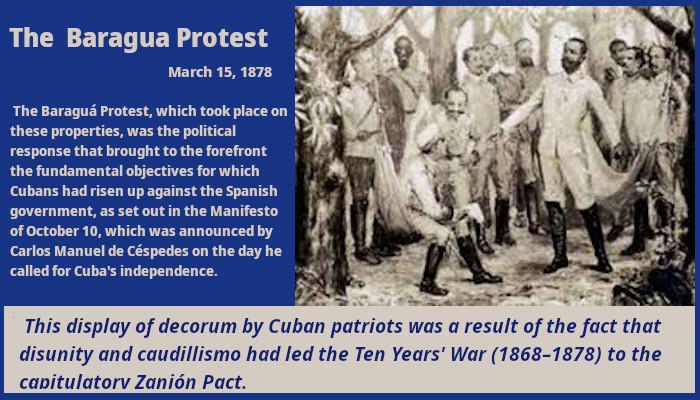
The Protest of Baraguá, a crucial and profoundly symbolic event that transpired on March 15, 1878, at a humble farm nestled within the verdant eastern foothills of Cuba, stands as the dramatic and almost mythic crystallization of the General Antonio Maceo’s unyielding vision of freedom.
This deed marked Maceo’s resolute refusal to endorse a peace that was, in his eyes, utterly hollow and fundamentally unjust. The protest unfolded in the immediate and tense aftermath of the Pact of Zanjón, an agreement that ostensibly brought an end to the decade-long Ten Years’ War (1868-1878). However, this treaty was deeply flawed; it formally concluded hostilities while cruelly leaving Cuba under the oppressive sovereignty of Spain. Furthermore, it preserved the institution of slavery in all but name, offering only nebulous and ultimately unenforced promises of reform.
For Antonio Maceo, affectionately known as “The Bronze Titan,” the indomitable field commander whose very presence and unwavering resolve had inspired countless rebel fighters, such terms represented a profound betrayal. They devalued the immense sacrifices, the blood, sweat, and tears shed by thousands of Cuban guerrillas who had fought with valor for the complete emancipation of their people.
When Spanish General Arsenio Martínez Campos, the architect of the treaty, rode to the modest encampment at Baraguá, he implored the Cuban forces to lay down their arms and accept the imposed peace. It was then that Maceo’s response, delivered with the force and clarity of a cannon shot, reverberated through the clearing: “The treaty is null and void if it does not bring liberty to Cuba and freedom to its people.”
Eyewitness accounts from that day paint a vivid picture of the scene. A tense, almost suffocating silence descended upon the clearing as Maceo’s words hung in the air, a stark challenge to the Spanish authority and the compromised peace.
Maceo’s resolute voice, however, shattered that silence, his eyes blazing with an unquenchable fire, a testament to a spirit that refused to be dimmed by the allure of diplomatic compromise or the weariness of war. His stance was not merely a personal one; it was a powerful articulation of the aspirations of all those who had dreamed of a truly free Cuba.
Although Maceo’s small, determined force was ultimately overwhelmed by superior Spanish numbers shortly after the protest, the defiant stand at Baraguá did not fade into obscurity. Instead, its impact reverberated powerfully throughout the island, igniting the flames of resistance anew.
This act of defiance directly contributed to the outbreak of the Guerra Chiquita (the Little War), which raged from 1879 to 1880. More profoundly, however, the Protest of Baraguá sowed the crucial ideological seed that would, in time, blossom into the full-fledged War of Independence, which was resumed in 1895.
In the collective memory of the Cuban nation, the event at Baraguá endures as a defining moment. It is remembered as the singular instance when one man’s powerful and principled “no” transformed into the rallying cry of an entire people yearning for genuine liberation.
Maceo’s unwavering commitment to total freedom, even in the face of overwhelming odds and the temptation of a premature peace, proved that the indomitable spirit of resistance cannot be shackled or extinguished by any treaty that fundamentally lacks true justice and equity. The Protest of Baraguá serves as an enduring testament to the power of conviction and the unyielding pursuit of liberty, a lesson etched permanently in the annals of Cuban history and the hearts of its people.