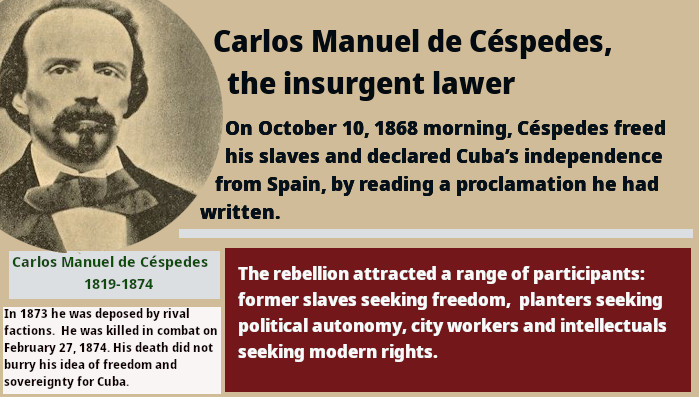
Carlos Manuel de Céspedes stood in the doorway of his sugar mill at La Demajagua on the morning of October 10, 1868, looking out over fields that had fed his family for years. He was a man of letters and law as much as of land, a lawyer by training and a planter by inheritance, and that dawn he chose a path that would change Cuba’s history. What began as a private refusal to accept injustice became the opening shot of a long, painful struggle for independence and the abolition of slavery.
Céspedes had lived for years with the contradictions of colonial Cuba: a sharp, growing desire for self-rule among some of its people, and the daily cruelty of a slave system that denied basic human dignity. His plantation was a microcosm of that world—prosperity born of forced labor, neighbors who benefited from the status quo, and a population increasingly restless under Spanish rule. He moved among these realities not as a distant lord but as a man who read, argued, and wrote. He gathered ideas from liberal thought and the independence movements across the Americas, and he sympathized with the island’s enslaved men and women.
On that October morning, Céspedes gathered his workers and read a proclamation he had written: he freed his slaves and declared Cuba’s independence from Spain. The words were simple and direct. For him, liberty and independence were inseparable; emancipation was not a concession to pressure but a moral and political necessity. By emancipating those he had owned and calling them compatriots, he reframed the struggle as one meant not merely to change rulers but to remake the social order itself.
The uprising at La Demajagua did not begin as a mass, coordinated revolution. It was a spark. Carlos Manuel de Céspedes and a small band of followers cut the sugarcane fields and marched toward Bayamo, calling on others to join. Their early victories were dramatic. Rebels captured towns, rallied local fighters and freed more people. They held Bayamo and turned it into a provisional capital, issuing manifestos and trying—often clumsily—to set up governance. In the chaos of rebellion, idealism ran up against harsh realities: lack of arms, fragmented command, and the entrenched power of Spain’s colonial forces.
Céspedes’ leadership combined charisma with a touch of stubbornness. He was eloquent, persuasive, and convinced of the rightness of his cause. He wrote letters to Latin American governments and to abolitionist sympathizers, seeking recognition and aid. At home, he tried to organize a new political order, assembling assemblies and councils even as battles flared. Yet the constraints were severe. The island’s geography favored partisan warfare, and the Spanish response was brutal and systematic. The colonial army, backed by a government determined to keep Cuba as a jewel of its empire, retaliated with scorched-earth reprisals and mass arrests.
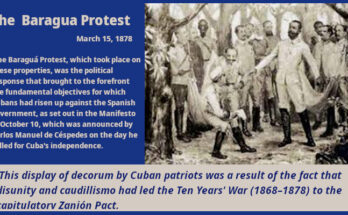
One of the most notable features of the Ten Years’ War, which began with Céspedes’ uprising, was its social complexity. The rebellion attracted a range of participants: former slaves seeking freedom, creole planters seeking political autonomy, city workers and intellectuals seeking modern rights. But unity was fragile. Questions about land reform, the role of freedpeople in governance, and the limits of property rights created friction within the insurgency. Céspedes himself faced criticism from more conservative rebels and from those who felt the revolution did not move quickly enough toward full social equality.
Despite the setbacks, the early phase of the war under Céspedes’ moral leadership set the tone for a conflict that would last a decade. His proclamation and his act of freeing his slaves reached beyond immediate military aims; they fed a narrative of Cuban nationhood that linked freedom from Spain with freedom for the enslaved. That narrative would persist, even as the war faltered, leaders changed, and the island endured years of suffering.
Personal tragedy shadowed Céspedes. The war took a toll on his family and his fortunes. As battles ground on and the rebel cause contracted under military pressure and internal divisions, his influence waned. In 1873 he was deposed by rival factions within the independence movement, exiled from some centers of power he had helped create. Captured by Spanish-aligned forces in 1874, he was killed under circumstances meant to silence him, but his death did not bury the idea that had animated him.
The uprising of October 10, 1868, is best understood not as a single event but as a clear rupture: a public declaration that Cuba would no longer accept colonial rule or the moral blight of slavery. Céspedes’ decision to free his slaves and call them to arms was a radical redefinition of who belonged to the nation. It inspired many and enraged others; it opened a conflict that would shape Cuba’s politics for generations. The Ten Years’ War ended without immediate independence, yet it planted seeds—of nationalist feeling, of abolitionist momentum, and of a literary and political culture that continued to press for change.
Carlos Manuel de Céspedes did not live to see a free Cuba, but his name became shorthand for the first, decisive bid for self-determination. His uprising was imperfect, marked by missteps and moral contradictions, but it was also honest in its core claim: that people, regardless of color or class, had the right to decide their fate. That idea, ignited on a humid October day among sugarcane and smoke, would continue to burn in Cuban memory forever.
Carlos Manuel de Céspedes stood in the doorway of his sugar mill at La Demajagua on the morning of October 10, 1868, looking out over fields that had fed his family for years. He was a man of letters and law as much as of land, a lawyer by training and a planter by inheritance, and that dawn he chose a path that would change Cuba’s history. What began as a private refusal to accept injustice became the opening shot of a long, painful struggle for independence and the abolition of slavery.
Céspedes had lived for years with the contradictions of colonial Cuba: a sharp, growing desire for self-rule among some of its people, and the daily cruelty of a slave system that denied basic human dignity. His plantation was a microcosm of that world—prosperity born of forced labor, neighbors who benefited from the status quo, and a population increasingly restless under Spanish rule. He moved among these realities not as a distant lord but as a man who read, argued, and wrote. He gathered ideas from liberal thought and the independence movements across the Americas, and he sympathized with the island’s enslaved men and women.
On that October morning, Céspedes gathered his workers and read a proclamation he had written: he freed his slaves and declared Cuba’s independence from Spain. The words were simple and direct. For him, liberty and independence were inseparable; emancipation was not a concession to pressure but a moral and political necessity. By emancipating those he had owned and calling them compatriots, he reframed the struggle as one meant not merely to change rulers but to remake the social order itself.
The uprising at La Demajagua did not begin as a mass, coordinated revolution. It was a spark. Carlos Manuel de Céspedes and a small band of followers cut the sugarcane fields and marched toward Bayamo, calling on others to join. Their early victories were dramatic. Rebels captured towns, rallied local fighters and freed more people. They held Bayamo and turned it into a provisional capital, issuing manifestos and trying—often clumsily—to set up governance. In the chaos of rebellion, idealism ran up against harsh realities: lack of arms, fragmented command, and the entrenched power of Spain’s colonial forces.
Céspedes’ leadership combined charisma with a touch of stubbornness. He was eloquent, persuasive, and convinced of the rightness of his cause. He wrote letters to Latin American governments and to abolitionist sympathizers, seeking recognition and aid. At home, he tried to organize a new political order, assembling assemblies and councils even as battles flared. Yet the constraints were severe. The island’s geography favored partisan warfare, and the Spanish response was brutal and systematic. The colonial army, backed by a government determined to keep Cuba as a jewel of its empire, retaliated with scorched-earth reprisals and mass arrests.
One of the most notable features of the Ten Years’ War, which began with Céspedes’ uprising, was its social complexity. The rebellion attracted a range of participants: former slaves seeking freedom, creole planters seeking political autonomy, city workers and intellectuals seeking modern rights. But unity was fragile. Questions about land reform, the role of freedpeople in governance, and the limits of property rights created friction within the insurgency. Céspedes himself faced criticism from more conservative rebels and from those who felt the revolution did not move quickly enough toward full social equality.
Despite the setbacks, the early phase of the war under Céspedes’ moral leadership set the tone for a conflict that would last a decade. His proclamation and his act of freeing his slaves reached beyond immediate military aims; they fed a narrative of Cuban nationhood that linked freedom from Spain with freedom for the enslaved. That narrative would persist, even as the war faltered, leaders changed, and the island endured years of suffering.
Personal tragedy shadowed Céspedes. The war took a toll on his family and his fortunes. As battles ground on and the rebel cause contracted under military pressure and internal divisions, his influence waned. In 1873 he was deposed by rival factions within the independence movement, exiled from some centers of power he had helped create. Captured by Spanish-aligned forces in 1874, he was killed under circumstances meant to silence him, but his death did not bury the idea that had animated him.
The uprising of October 10, 1868, is best understood not as a single event but as a clear rupture: a public declaration that Cuba would no longer accept colonial rule or the moral blight of slavery. Céspedes’ decision to free his slaves and call them to arms was a radical redefinition of who belonged to the nation. It inspired many and enraged others; it opened a conflict that would shape Cuba’s politics for generations. The Ten Years’ War ended without immediate independence, yet it planted seeds—of nationalist feeling, of abolitionist momentum, and of a literary and political culture that continued to press for change.
Carlos Manuel de Céspedes did not live to see a free Cuba, but his name became shorthand for the first, decisive bid for self-determination. His uprising was imperfect, marked by missteps and moral contradictions, but it was also honest in its core claim: that people, regardless of color or class, had the right to decide their fate. That idea, ignited on a humid October day among sugarcane and smoke, would continue to burn in Cuban memory for a century and more.
Related article
The Unjust Cespedes’s Removeval from office