
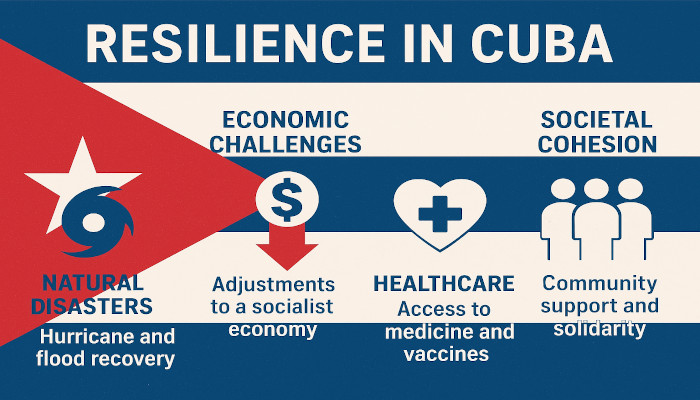
Few words capture the Cuban spirit as powerfully as resilience. Across decades of hardship, isolation, and transformation, Cuba has forged a culture of endurance that is both collective and deeply personal. To understand resilience in Cuba is to trace the heartbeat of a nation that has survived against the odds.
From the wars of independence in the 19th century, Cubans learned to adapt and resist foreign domination, building a tradition of sacrifice and solidarity.
The 1959 Revolution was not just a political upheaval—it was a declaration of resilience. Leaders like Fidel Castro, Camilo Cienfuegos, and Che Guevara embodied the belief that perseverance could reshape destiny.
After the collapse of the Soviet Union, Cuba faced severe shortages. Yet communities innovated—urban farming, bicycle transport, and grassroots solidarity became lifelines.
Economic blockade: For over six decades, the U.S. embargo has tested Cuba’s capacity to endure. Resilience here means improvisation: repairing old cars, repurposing scarce materials, and finding creative solutions to shortages.
Health and education: Despite limited resources, Cuba has maintained strong public health and education systems. Doctors serving abroad and literacy campaigns at home reflect resilience as service and knowledge-sharing.
Cultural vitality: Music, art, and sport have been outlets of resilience, transforming hardship into creativity. From son and salsa to baseball and ballet, culture has been a refuge and a weapon of pride.
Resilience in Cuba is collective. Neighborhoods organize to support families during hurricanes, rationing crises, or health emergencies.
Cuban women have been central to resilience—leading households, professions, and grassroots organizations that sustain communities.
Cuba’s resilience extends beyond its borders. Medical brigades in Africa and Latin America show how endurance at home translates into solidarity abroad.
Cuba’s resilience is not passive survival; it is active creativity, solidarity, and defiance. It teaches that resilience is strongest when rooted in community, culture, and a shared vision of justice. In a world facing climate change, inequality, and geopolitical tensions, Cuba’s story reminds us that resilience is not only about enduring hardship, but about transforming it into dignity.