
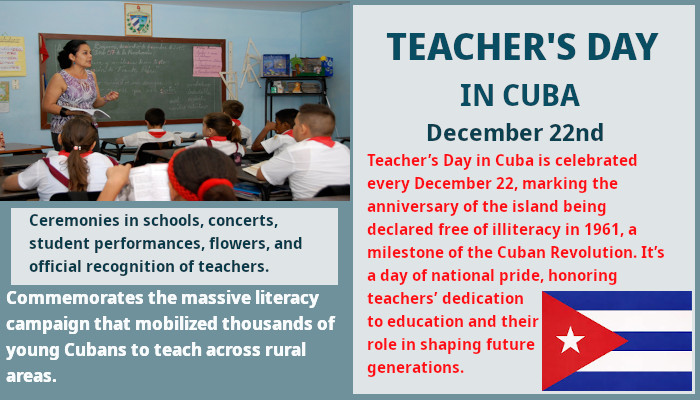
On the morning of December 22, 1961, the streets of Havana filled with joy. Children, campesinos, and workers gathered in plazas across the island, waving handmade banners that read: “Territorio Libre de Analfabetismo” (Territory Free of Illiteracy). That day, Fidel Castro proclaimed Cuba had eradicated illiteracy, thanks to the tireless efforts of thousands of volunteer teachers, many of them teenagers who had left their homes to live in rural communities.
From that moment, December 22 became Teacher’s Day in Cuba, not just to honor educators but to celebrate the nation’s collective victory over ignorance. In 1961, more than 250,000 volunteers joined the Literacy Campaign. Many were young students, known as brigadistas, who carried lanterns, chalk, and notebooks into the countryside. They taught farmers and rural families to read and write, often by candlelight, while learning from them about the rhythms of rural life.
This exchange created a bond: teachers became students, and students became teachers. It was a revolution not only of letters but of solidarity.
Every year on December 22, schools across Cuba organize tributes, cultural events, and ceremonies. Students present flowers, poems, and songs to their teachers. The day is also marked by official speeches, recognizing educators as pillars of Cuba’s human capital and revolutionary spirit.
Teacher’s Day in Cuba is more than a holiday. It is a living memory of the Literacy Campaign, a reminder that education can transform a nation. It honors the courage of those who taught under lantern light, the resilience of campesinos who embraced learning, and the enduring role of teachers as moral guides and builders of society.
In Cuba, Teacher’s Day is not just about gratitude; it is about remembering a revolution of knowledge, where teaching became an act of liberation.