
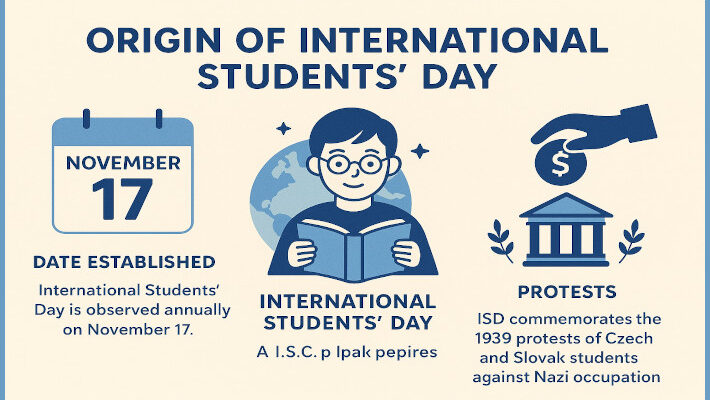
International Students’ Day may sound like a cheerful global celebration today. However, not many people know that its roots lie in one of the darkest chapters of student activism. Long before it became a day to honor learning, youth leadership, and academic freedom, it began as a tribute to courage, the kind that rose against dictatorship. International Students’ Day is a day to be honored.
To understand why 17 November holds such weight, we step back to 1939 Prague. At the time, students didn’t just attend university they became the frontline of resistance. Let’s get into it:
In October 1939, Czechoslovakia was under Nazi occupation. When Czech medical student Jan Opletal was fatally shot during a peaceful protest against the invasion, universities across Prague erupted in solidarity. His funeral on 15 November became a massive rally — thousands of students marched, refusing to be silenced. The Nazi response was swift and brutal.
On 17 November 1939, German forces stormed university buildings across Prague at dawn. The immediate result was nine student leaders executed without trial, more than 1,200 students arrested and sent to concentration camps, and all Czech universities were shut down.
This marked one of the most violent crackdowns on student activism in modern history.
After the war, the global student movement recognized 17 November as a symbol of bravery against oppression. In 1941, the date was officially proclaimed International Students’ Day in London by the International Students’ Council, with support from more than 50 nations.
It remains the only global day dedicated specifically to students ,not just academics, but their power to challenge injustice.
International Students’ Day is more than a remembrance. It stands for the right to education without discrimination, freedom of expression and peaceful protest, safety of students worldwide, especially in conflict zones, and the belief that young people shape political and social change.
Today many students around the world still fight for their rights, while others like the Cuban students have, after the Cuban Revolution came to power, free education, the rights to have their own organizations and to express freely without the risk of repression.