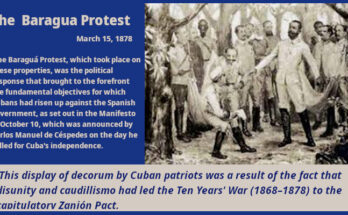
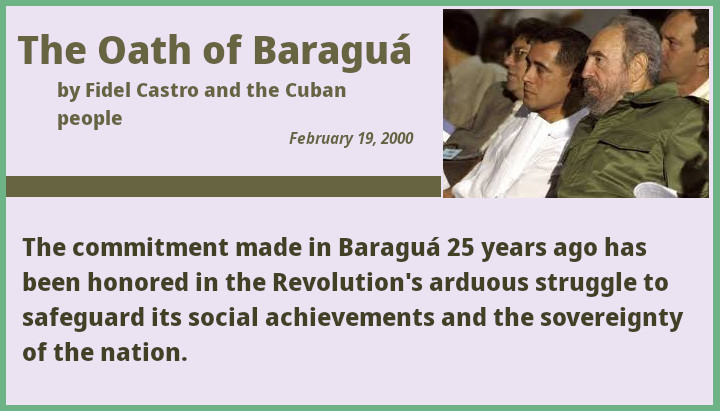
At the location known as Mangos de Baraguá, situated in the Santiago de Cuba territory, one of the most significant historical events in Cuba’s enduring fight for independence from Spain occurred. On March 15, 1878, General Antonio Maceo firmly rejected the surrender proposal presented by the highest representative of the Spanish Crown. This moment continues to symbolize the valiant rebellion of the Cuban people to this day.
On February 19, 2000, in the historic grove of Baraguá, the Cuban populace took the Oath to Resist and Overcome, facing a new and equally intricate scenario for the nation, no longer on the battlefield, but in the realm of ideas.
In the very location where General Antonio resolutely dismissed a peace devoid of independence, Commander-in-Chief Fidel Castro delivered the notable document titled “We’ll See Who Resists Longer!”
Amid the monumental struggle for the return of the child Elián González to his family and homeland, the leader of the Cuban Revolution, recalling the historic protest led by the Bronze Titan, issued a statement condemning the injustices being inflicted and all acts of aggression against the island by the world’s most dominant empire: the blockade and the escalated economic warfare; subversive plots; sabotage and various forms of terrorism; legislation such as the Helms-Burton and Torricelli Acts; along with numerous actions aimed at suffocating our people until they are utterly exhausted.
On that day, Fidel was particularly emphatic when he declared that “we have the right to peace, to respect for our sovereignty and our most sacred interests. Forty years of infamy,” he emphasized, “have not succeeded in breaking our resolve to fight. We have not grown weary, nor will we.”
The Oath to Resist and Conquer was proclaimed by Fidel and embraced by millions of Cubans. The commitment made in Baraguá 25 years ago has been honored in the Revolution’s arduous struggle to safeguard its social achievements and the sovereignty of the nation.
The text, as rebellious and courageous as the people themselves, outlined what would become the historical objectives for future generations of Cubans. Fidel stated that “our struggle would take on a thousand different forms and styles,” and this has indeed been the case for over two decades, filled with challenges and threats.
The path traveled since that February 19, 2000, has been arduous; however, we Cubans have remained steadfast, confronting adversities and overcoming setbacks, preserving national unity.
The Baraguá Oath, presented by Fidel and supported by millions of compatriots, continues to summon us daily to the fight for truth and ideas. To our adversaries, we will always have the same response. That which the Commander in Chief proclaimed in the early days of the 21st century: “We shall see who endures longer!”