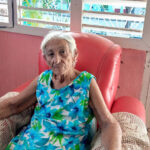
With her memory still fresh, Irma Sánchez Medina, born in Mayarí and a resident of Santiago de Cuba by choice, cherishes the tragic memory of Hurricane Melissa, after a month of relentless impact on eastern Cuba.
But this 78-year-old woman, recently arrived in the city of Contramaestre, not only shares her account of what she experienced in the early morning of October 29th, but also draws comparisons with other weather events she has witnessed in the past.
“I remember Hurricane Flora; it was terrible, with torrential rain in eastern Cuba. I was 16 at the time, and I went out into the streets with my aunt to help people in need once that devastating hurricane had passed.”
“Its passage over the eastern provinces caused unprecedented flooding, resulting in the deaths of over a thousand people and many more seriously injured.”
“That hurricane was a lesson for the people of eastern Cuba as it swept through the region and Camagüey. There were massive evacuations, especially in my birthplace: Mayarí Abajo, where some 60,000 people sought shelter. I also remember, from the news reports, that the Cauto River reached a width of 80 kilometers. It was five days of devastation.”
“It was a devastating storm.” “Another cyclone that left me distressed was Sandy, when I was living in Santiago de Cuba. It was a deadly natural phenomenon during the 2012 hurricane season, striking with force as a Category 2 hurricane, leaving a trail of destruction, pain, and incalculable losses in several provinces of eastern Cuba.”
“With Sandy, we practically had to rebuild the city of Santiago de Cuba: the cathedral, some parks, homes, schools, social service institutions, and we had to revive agriculture and almost all of the socio-economic infrastructure.”
With tears in her eyes and the sadness of a painful memory, Irma Sánchez Medina testifies to Hurricane Melissa, which she describes as a “demon unleashed in the Caribbean” that lashed us with blind fury and devastating force.
” “Previously, where I lived in the La Risueña neighborhood of Santiago de Cuba, the overflowing river in the area almost flooded my house. Thank God the rainwater didn’t affect us, but I do have some neighbors who had to be rescued because their houses were flooded and they lost all their belongings.”
“That heartbreaking scene caused me tremendous pain, seeing how people had gone out the night before to take refuge in the neighborhood and when they returned on the morning of the 29th, they found none of their personal or household belongings. It was unbelievable.”
“Currently, I live in the city of Contramaestre, and I confess that in the years I have left to live, I pray to the Almighty that I never have to experience another shock or anguish caused by the devastating effects of a hurricane.”
“That heartbreaking scene caused me tremendous pain, seeing how people had left the night before to take shelter in the neighborhood and when they returned on the morning of the 29th, they found none of their personal or household possessions. It was unbelievable.” More than a month after Melissa passed through the Eastern region of Cuba, Irma Sánchez Medina, born in Mayarí and adopted by Santiago de Cuba, is putting into practice the best practices of a resilient culture to face the recovery stage that these times demand.